News, views and commentary from the telecoms sector across emerging markets and developing countries worldwide
Showing posts with label Uruguay. Show all posts

Tuesday, 15 December 2009

More musings on a latin t(r)ip

The most recent article here was both a round up of some recent news from Paraguay and a trip down memory lane. I reminisced fondly about an interesting tour of four South American countries which I enjoyed last year. In doing so, I mentioned in passing the two telecoms cooperatives I was able to visit in Bolivia.

LATAM17
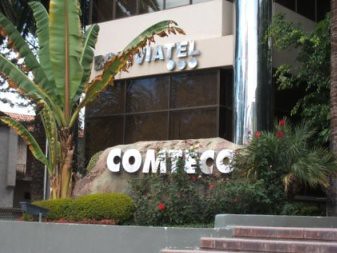
COMTECO HQ, Cochabama Bolivia

As the Bolivia market report from telecoms industry watchers Buddecomm notes, the Andean country is one of South America's poorest and least developed. According to Buddecomm's figures, Bolivia has the continent's lowest mobile penetration and second lowest fixed line teledensity. With regard to the former measure, data from the the World Cellular Information Service supports this claim. WCIS indicates that the country's mobile penetration stood at just 60.08% as of the end of September this year. Most other countries in South America's less affluent northern region show much higher numbers, for example:
  • Venezuela - 105.98%
  • Ecuador - 91.35%
  • Colombia - 83.75%
In the more prosperous Conosur region, the numbers tend to be higher still, for example:
  • Uruguay - 117.10%
  • Argentina - 115.97%
  • Chile - 98.33%
Certainly, Bolivia seemed to be a visibly less affluent country than others I have been able to visit in the region. Although I did spend one night in the capital, La Paz, in order to make an early flight on to Caracas (via Lima), my meetings were elsewhere. The cities I visited were Santa Cruz and Cochabamba. The former city is Bolivia's most populous and is at the heart of the country's economic activity. The latter city is Bolivia's third largest settlement, set in an Andean valley, with a magnificent backdrop of mountain peaks.

As described in the most recent post here, the purpose of my tour around South America was to drum up support for the Americas Com conference and exhibition, the success of which it was one of my tasks to contribute towards until last year. In the other countries I visited, it was sufficient to spend time just in their capital cities, travelling between meetings by taxi. This would not have worked in Bolivia, where in the wireline space, at least, the telecommunications market is highly fragmented.

In Bolivia, a national incumbent fixed line operator - Entel - does exist. This was renationalised by the left wing administration of President Evo Morales just weeks after we visited the company's Santa Cruz office. My understanding, however, is that the majority of the country's PSTN subscriptions are with the numerous cooperatives. We felt it could be useful to visit some of these. In Santa Cruz, we were received at the offices of COTAS (Cooperativa de Telecomunicaciones Santa Cruz). In Cochabamba, we visited the headquarters of COMTECO (Cooperativa de Telecomunicaciones Cochabamba).

LATAM12
Entel offices, Santa Cruz, Bolivia

As with the visit to Paraguay's COPACO described in the most recent previous article here, conversations with the representatives of these cooperatives (about how they might contribute to our conference) were strikingly unlike those we had at the offices of private sector telcos elsewhere in South America. Again, the themes to which our contacts warmed most readily were around bridging the digital divide and extending the availability of affordable basic services to poorer and more remotely located users.

While none of these cooperatives have constructed mobile networks, COTAS is able to compete in the cellular space. Bolivia is a rare case of a South American country in which even one MVNOs is in existence - and that MVNO is the mobile offering of COTAS, hosted by Nuevatel (which operates under the Viva brand), an MNO once owned by John Stanton's Western Wireless.

LATAM14
Nuevatel HQ, Santa Cruz, Bolivia

That COTAS is able to operate as an MVNO is not due to any particular encouragement on the part of the Bolivian telecoms regulator. A 2006 report from Diamond Consultants asked whether conditions, at that time, were right for the emergence of MVNOs in India. I'll admit that I haven't yet read this report very carefully, but perhaps it's safe to guess the answer might have been 'no'. After all, as recently as March this year, DevelopingTelecomsWatch was reporting on continued regulatory wrangles which looked set to delay the market entry of MVNOs in India. As part of its discussion, the Diamond Consultants report makes remarks about the state of play for MVNOs in some other markets around the world. Bolivia is observed to be a market in which the regulator has discouraged MVNOs, with policies "primarily driven by the low penetration of mobile services and the low geographic reach of the network." It is further argued that "low ARPUs meant that the discount MVNO model was not viable" The regulator's stance is described as seeing "brand and data service-oriented MVNOs... encroaching on the already limited capacity" Rather than encourage MVNOs to emerge, the report observes, the Bolivian regulator "stepped in and provided incentives to mobile network operators to improve capacity and coverage". Despite this, COTAS Movil was launched in mid-2002 to complement the cooperative's existing portfolio of fixed voice, ADSL and cable TV services.

The report puts Argentina in the same category as Bolivia - markets in which the entry of MVNOs is discouraged by regulatory agencies. Despite this, MVNO services have been launched there. As with Bolivia, this has been done by telecoms cooperatives.

Now, according to TeleGeography, a federation of telecoms coops, Fecosur, is planning to expand the reach of these mobile services, expecting to extend coverage to around 150 cities and municipalities across the country within four or five months. According to the federation’s president, Antonio Roncoroni, the service is already provided in 14 cities throughout the country under the 'Nuestro' banner. Fecosur and another body, Fecotel, jointly represent around 300 telecoms cooperatives across the country.

Having mused here more than once in the past about Latin America's cooperatives and about telcos renationalised by left-of-centre governments - and about how these organisations appear to operate a little differently from those for whom shareholder value is a key consideration - it will be interesting to observe whether this new mobile offering will have any very significant impact on the Argentinean market.

Others who finds the telecoms coops of Latin America at all interesting might like to look over a scholarly paper (dated 2005) from the The Journal of Community Informatics which I found recently and which rounds up the history of the Argentinean cooperatives quite nicely.

As the English winter draws in, thoughts of sunny days touring Latin America's telcos in the balmy days of April 2008 are quite attractive. Hence these musings today.

Share/Save/Bookmark

Wednesday, 17 June 2009

Ecuador's struggling CDMA MNO set to be rescued by a strategic partner?


Back in late January, I wrote (on my former blog, since handed over to a former colleague) about how Ecuador's struggling state-owned CDMA mobile operator Alegro PCS was the subject of reported offers for prospective strategic partnerships from Uruguay's Antel, and Venezuela's Movilnet, both of which are also owned by the Governments of their respective countries. I noted then that these offers both came from countries which, like Ecuador, have left-of-centre governments. This prompted me to mull over the subject of the possible telecoms sector links between politically sympathetic Latin American countries which I'd learned something about on my own travels in that part of the world. It's a topic I personally find quite interesting, so I took the opportunity to expand on this theme here in March.

Today, thanks to TeleGeography, I received an update on the news item which set this train of thought in motion - the state of play at the ailing Ecuadorean cellco. In January, I'd reported news that Alegro PCS was said to be 60 to 90 days away from reaching an agreement with a foreign strategic investment partner. This has clearly taken a bit longer than anticipated to play out. Today's news from TeleGeography suggests that the cellco is now still "approximately two months away from reaching an agreement" with a partner. The article does not clarify which company this partner is likely to be, simply repeating the ones mentioned at the start of the year, which included Telekomunikasi Indonesia (Telkom) as well as the Venezuelan and Uruguayan parties. The fact that this back on the news wires, however, might suggest that some progress is being made.

If a deal of this sort is not reached, it looks as though the Ecuadorean Government will force the sale of Alegro PCS, according to the country's President, as quoted in the TeleGeograpy article, which also notes that the CDMA operator has had to delay a plan to roll out GSM infrastructure due to a lack of capital and is instead currently using wholesale GSM capacity from larger rival Movistar Ecuador. This move has yet to make a significant impact on the operator's feeble market share. When I first visited this story in January, Alegro PCS had just 1.31% of the country's mobile subscriptions according to December 2008 figures from WCIS. That figure had improved only very slightly to 1.34% by March this year.

With high reported debts and such a tiny share of the market in a country of just 14 million people, I wonder how attractive Alegro PCS is going to look to any prospective buyer if a sale does become necessary in the view of the Government. The toughness of the competitive environment is compounded by the fact that in addition to Telefónica-backed Movistar, the Ecuadorean market is home to an MNO which is part of the powerful América Móvil group, a venture of Mexican multi-billonaire Carlos Slim Helú. It gets worse. The country's 87.15% mobile penetration rate does not leave boundless room for growth, even for the two powerhouse-backed operators currently splitting the bulk of the market between them.

So it remains to be seen what the future holds for struggling Alegro PCS. I can't decide if rescue from a telco owned by the state agencies of some politically sympathetic government will ensure the long term survival of the MNO or just delay, at some cost to the friendly partner, the eventual demise of a company caught between the vastly superior resources of two powerful competitors. I'll have to have a look some time to see if there's a precedent anywhere else in Latin America for a cello successfully competing with both of the region's two dominant telecoms groups in a relatively small market. It sounds like a tough position to be in.
Share/Save/Bookmark