News, views and commentary from the telecoms sector across emerging markets and developing countries worldwide
Showing posts with label MVNO. Show all posts

Tuesday, 15 December 2009

More musings on a latin t(r)ip

The most recent article here was both a round up of some recent news from Paraguay and a trip down memory lane. I reminisced fondly about an interesting tour of four South American countries which I enjoyed last year. In doing so, I mentioned in passing the two telecoms cooperatives I was able to visit in Bolivia.

LATAM17
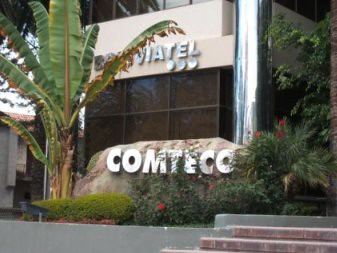
COMTECO HQ, Cochabama Bolivia

As the Bolivia market report from telecoms industry watchers Buddecomm notes, the Andean country is one of South America's poorest and least developed. According to Buddecomm's figures, Bolivia has the continent's lowest mobile penetration and second lowest fixed line teledensity. With regard to the former measure, data from the the World Cellular Information Service supports this claim. WCIS indicates that the country's mobile penetration stood at just 60.08% as of the end of September this year. Most other countries in South America's less affluent northern region show much higher numbers, for example:
  • Venezuela - 105.98%
  • Ecuador - 91.35%
  • Colombia - 83.75%
In the more prosperous Conosur region, the numbers tend to be higher still, for example:
  • Uruguay - 117.10%
  • Argentina - 115.97%
  • Chile - 98.33%
Certainly, Bolivia seemed to be a visibly less affluent country than others I have been able to visit in the region. Although I did spend one night in the capital, La Paz, in order to make an early flight on to Caracas (via Lima), my meetings were elsewhere. The cities I visited were Santa Cruz and Cochabamba. The former city is Bolivia's most populous and is at the heart of the country's economic activity. The latter city is Bolivia's third largest settlement, set in an Andean valley, with a magnificent backdrop of mountain peaks.

As described in the most recent post here, the purpose of my tour around South America was to drum up support for the Americas Com conference and exhibition, the success of which it was one of my tasks to contribute towards until last year. In the other countries I visited, it was sufficient to spend time just in their capital cities, travelling between meetings by taxi. This would not have worked in Bolivia, where in the wireline space, at least, the telecommunications market is highly fragmented.

In Bolivia, a national incumbent fixed line operator - Entel - does exist. This was renationalised by the left wing administration of President Evo Morales just weeks after we visited the company's Santa Cruz office. My understanding, however, is that the majority of the country's PSTN subscriptions are with the numerous cooperatives. We felt it could be useful to visit some of these. In Santa Cruz, we were received at the offices of COTAS (Cooperativa de Telecomunicaciones Santa Cruz). In Cochabamba, we visited the headquarters of COMTECO (Cooperativa de Telecomunicaciones Cochabamba).

LATAM12
Entel offices, Santa Cruz, Bolivia

As with the visit to Paraguay's COPACO described in the most recent previous article here, conversations with the representatives of these cooperatives (about how they might contribute to our conference) were strikingly unlike those we had at the offices of private sector telcos elsewhere in South America. Again, the themes to which our contacts warmed most readily were around bridging the digital divide and extending the availability of affordable basic services to poorer and more remotely located users.

While none of these cooperatives have constructed mobile networks, COTAS is able to compete in the cellular space. Bolivia is a rare case of a South American country in which even one MVNOs is in existence - and that MVNO is the mobile offering of COTAS, hosted by Nuevatel (which operates under the Viva brand), an MNO once owned by John Stanton's Western Wireless.

LATAM14
Nuevatel HQ, Santa Cruz, Bolivia

That COTAS is able to operate as an MVNO is not due to any particular encouragement on the part of the Bolivian telecoms regulator. A 2006 report from Diamond Consultants asked whether conditions, at that time, were right for the emergence of MVNOs in India. I'll admit that I haven't yet read this report very carefully, but perhaps it's safe to guess the answer might have been 'no'. After all, as recently as March this year, DevelopingTelecomsWatch was reporting on continued regulatory wrangles which looked set to delay the market entry of MVNOs in India. As part of its discussion, the Diamond Consultants report makes remarks about the state of play for MVNOs in some other markets around the world. Bolivia is observed to be a market in which the regulator has discouraged MVNOs, with policies "primarily driven by the low penetration of mobile services and the low geographic reach of the network." It is further argued that "low ARPUs meant that the discount MVNO model was not viable" The regulator's stance is described as seeing "brand and data service-oriented MVNOs... encroaching on the already limited capacity" Rather than encourage MVNOs to emerge, the report observes, the Bolivian regulator "stepped in and provided incentives to mobile network operators to improve capacity and coverage". Despite this, COTAS Movil was launched in mid-2002 to complement the cooperative's existing portfolio of fixed voice, ADSL and cable TV services.

The report puts Argentina in the same category as Bolivia - markets in which the entry of MVNOs is discouraged by regulatory agencies. Despite this, MVNO services have been launched there. As with Bolivia, this has been done by telecoms cooperatives.

Now, according to TeleGeography, a federation of telecoms coops, Fecosur, is planning to expand the reach of these mobile services, expecting to extend coverage to around 150 cities and municipalities across the country within four or five months. According to the federation’s president, Antonio Roncoroni, the service is already provided in 14 cities throughout the country under the 'Nuestro' banner. Fecosur and another body, Fecotel, jointly represent around 300 telecoms cooperatives across the country.

Having mused here more than once in the past about Latin America's cooperatives and about telcos renationalised by left-of-centre governments - and about how these organisations appear to operate a little differently from those for whom shareholder value is a key consideration - it will be interesting to observe whether this new mobile offering will have any very significant impact on the Argentinean market.

Others who finds the telecoms coops of Latin America at all interesting might like to look over a scholarly paper (dated 2005) from the The Journal of Community Informatics which I found recently and which rounds up the history of the Argentinean cooperatives quite nicely.

As the English winter draws in, thoughts of sunny days touring Latin America's telcos in the balmy days of April 2008 are quite attractive. Hence these musings today.
Share/Save/Bookmark

Wednesday, 25 November 2009

South Africa's Telkom: a fighting chance?

Telkom Direct stores: a vital channel to market as the company faces challenging times?

DevelopingTelecomsWatch is picking up lots of chatter today about Telkom, the incumbent wireline operator of South Africa. This started when this morning's daily roundup from TeleGeography included the news that the company is planning to re-enter the mobile space in 2010 after only a brief period with no cellular presence.

Until almost exactly one year ago, Telkom and Vodafone had each owned 50% of Vodacom, the pan-African mobile operator with 35 million customers in South Africa, Tanzania, Lesotho, Mozambique and the Democratic Republic of Congo. Earlier this year, the UK-headquartered mobile giant secured a controlling interest in Vodacom with the purchase of an additional 15% stake from Telkom. The remaining 35% owned by the South African incumbent was listed on the Johannesburg Stock Exchange and unbundled to the company's shareholders.

When plans for this transaction were first announced late last year, Lloyd Gedye of South Africa's Mail & Guardian
reported the stated rationale for Telkom's sale of its stake in Vodacom and noted that many analysts "had expressed skepticism at Telkom's ability to make a success of going it alone in the mobile space and have questioned how Telkom will survive without the Vodacom cash cow."

Back in November 2008, then, Gedye wrote that Telkom CEO Reuben
September was arguing that the deal would unlock significant value for the company's shareholders because its fixed-line business had "been undervalued while it clung on to its 50% stake in Vodacom".

How much validity is there in that notion of Telkom's wireline property being undervalued? The notion is, at the very least, open to question according to An Ovum note issued this week in response to Telkom's announced plans to roll out its own mobile services. Ovum examine the background to this strategy and observe that fixed-line penetration (currently under 9%) is continuing to fall in South Africa so "mobile is clearly the communication mode of choice, and this is where [Telkom] needs to be for its customers."

However, the note continues, establishing a new mobile operation in South Africa won't be easy, as mobile penetration is already above the 100% mark and because Telkom will be competing with two large, well-established players in Vodacom and
MTN.

A third mobile operator, Cell C, has achieved a 15.57% share (according to WCIS) of the country's mobile market since its commercial launch in late 2001. For other mobile service providers, South Africa has offered a very challenging competitive environment. Back in March, in an article on the prospects for MVNOs in both Africa and India, DevelopingTelecomsWatch noted that Virgin Mobile South Africa had failed to capture even 1% of the country's mobile subscriptions by the end of 2008. The significance of the recently-launched CDMA mobile offering from Neotel, Telkom's principal challenger in the fixed-line arena, remains to be seen.

While Ovum's note politely points out the level of challenge facing Telkom's proposed new mobile offering, others have responded with far less restrained language. An article by Tiisetso Motsoeneng of Reuters today quotes one analyst who certainly pulls no punches.

"To be targeting the retail market in that industry, I think it will be suicide for Telkom," Jan Meintjes, an analyst at Gryphon Asset Management said. "I fail to see how a converged strategy of fixed and mobile is going to be earning significant margins," Meintjes said. "Unless they can show to the market that there's a specific niche that they're targeting and how they can exploit that in terms of earning margins on that business that will give them an accepted ROE on their capital expenditure, I don't see how that can be value enhancing."

The Ovum note, however, reminds us that in South Africa, Telkom claims not to be starting a mobile network operation from scratch. The note points out that the group already has fixed core network assets, which are used by both Vodacom and MTN for backhaul, and an established channel to market through over 134 Telkom Direct shops. Ovum contend that Telkom can choose to "develop a new brand and associated lifestyle concept to target some of the high-spending customers". Also, the Ovum note continues, Telkom could potentially have greater appeal to enterprise customers due to an ability to bundle services across fixed and mobile networks.

Lloyd Gedye's article late last year indicated that another use of the Telkom's Vodacom windfall might be to acquire a number of new mobile licences in numerous African countries. These would be in addition to the company's existing interest in Nigeria. According to Candice Jones of ITWeb, however, Multi-Links, the Nigerian telco in which Telkom has had a controlling interest since 2006, "is in dire straits, knocking Telkom's annual results set with a R1.7 billion net loss."

Let's see if this difficult experience discourages Telkom from further international expansion. My sense all this year is that African mobile markets are more likely to consolidate than they are to offer rich opportunities for new entrants.

While mobility in South Africa offers a new source of revenue for Telkom, Ovum argue that any new revenue streams from mobile - or from enhanced ICT services currently being developed - "are unlikely to significantly bolster its financials in the near term." Of more immediate concern, Ovum contend, is Telkom's rising cost base. Ovum's note expresses the belief that by implementing best-practice approaches in its own transformation, Telkom is giving itself a fighting chance in the challenging times ahead of it.
Share/Save/Bookmark

Thursday, 11 June 2009

Ad-driven MVNO concept ailing in Europe but set to succeed in India?

In March, I chewed over the question of whether India or one or more markets in Africa would be the most likely setting for genuinely successful MVNOs to gain traction. I came down on the side of India, notwithstanding the fact that earlier the same month I had commented briefly on regulatory wrangles which looked set to frustrate certain business models for prospective MVNOs in the country.

One possible new entrant in India, according to a Cellular News story today, could be Blyk. For anyone not familiar with this company, Blyk, positioned by its developers as a "totally new proposition", has been making headlines (in Europe at least) and, as I have observed, stimulating debate at telecoms industry conferences since its inception in 2007.

The Blyk business model has been built on a belief that young people (the offering has been targeted exclusively at 16-24 year olds) love to communicate, would like to do so without eating into their disposable income and can thus be persuaded to accept a certain amount of advertising being sent to their mobile devices in exchange for a free service.

The Finnish founders of Blyk, Pekka Ala-Pietilä and Antti Öhrling, contend that their offering to advertisers is also very compelling: "Blyk allows advertisers to reach young people using the only channel that they carry with them everywhere," says the blurb on Blyk's corporate website. Advertisers, runs the blurb, "can engage them in a dialogue, one that they are uniquely ready for, because they’ve opted in." The ad-driven MVNO says its advertising products are "based on the most dominant pattern of mobile behaviour among young consumers: getting a message and responding to it" so that "its offerings create awareness, build relationships and drive sales.

Will this resonate in India? Possibly, but there might be a number of questions asked. The Cellular News story quotes Sanjay Behl, head of branding and marketing operations at cellco Reliance Communications, who has expressed concerns about whether consumers would find the adverts too intrusive, while declining to confirm or deny if the company is in talks with the MVNO.

This kind of response is not new for Blyk. When the UK press covered the launch of the new service back in 2007, the main talking point seemed to be to what degree consumers might find mobile advertising irritating. The Guardian newspaper, for example, warned that advertisers would "have to be careful not to annoy their new users with the mobile equivalent of spam email."

Pekka Ala-Pietilä, once President of Nokia, responded to this challenge in the same article: "We will collect the profiles of the young consumers, or members as we call them, who use the service to find out their areas of interest," he said, adding that "by understanding the preferences of our customers, advertisers will be able to create very relevant campaigns."

It now seems that this model is indeed set to be brought to the Indian market. According to a recent MocoNews article, senior level recruitment is already underway and Blyk spokesperson Ann Sarimo has confirmed that the MVNO does indeed plan on doing business in the country.

How successful, then, has Blyk been in Europe? Well, while the company can claim to have had some impact in the UK markets, recent reports have focused on a scaling down of its ambitions to offer similar services on the same basis elsewhere.

Caroline Gabriel, for example, writing for Rethink Wireless, suggests that the Blyk variation on more standard MVNO business models "is now showing signs of strain", with the company "reported to be scaling back its efforts."

Gabriel talks in terms of Blyk's UK operation "only" having acquired about 200,000 subscribers, which, in her view, "suggests the model may be proving too limited to support Blyk's ambitions and those of its backers, especially at a time of advertising downturn." In Gabriel's article, Pekka Ala-Pietilä is said to have admitted that the economic crisis has forced the company to cut costs and streamline its operation, despite having raised an additional USD 51 million to support a planned expansion into the European mainland. Gabriel reports that even when these funds were raised, Blyk was indicating that it favoured a switch away from running full-blown MVNOs of its own, in favour of a new marketing strategy based on partnering with major MNOs and media companies. Gabriel suggests that the most likely route forward now is for Blyk to work with larger cellcos, perhaps to run an ad-supported strand of their business under the MNOs' brands rather than Blyk's own.

Around the same time, Mobile Today echoed Caroline Gabriel's thoughts, contending that Blyk "has declared it will freeze its expansion plans into Europe." This article, too, insists that "modest consumer take-up" and "investor reluctance" are the factors which have "grounded" the project. Blyk co-founder Antti Öhrling, now the CEO of the UK operation, is quoted as saying that the UK would be used as a 'proof of concept', i.e. a case study for selling the mobile advertising concept to other markets.

I had to smile when this article brought up comments made by John Strand of Strand Consult. Strand admits in his own bio that "being honest - and giving his honest opinion on current issues in the mobile industry has become [his] trademark - even when it means being controversial or treading on some toes." I have seen this at first hand at one or two conferences and remember sharing a joke with a colleague who is still in the telecoms conference production business, as I was for a good few years. We agreed that nothing was surer to rattle an august line-up of big name speakers from major telecoms businesses than a few particularly piercing questions from Mr. Strand. We couldn't decide if this was a good or bad thing for a conference organiser - good in terms of livening things up a bit, or bad in terms of scaring top-name speakers away from future iterations of an event.

The Mobile Today article reminded me of the comments Strand made when Blyk was first launched. Adopting his trademark style, Strand remarked then that he "would rather put his money on a lottery ticket." Last month, commenting on the reported scaling back of Blyk's ambitions, he said "it is a difficult proposition because you need a hell of a lot of advertising revenue to mae it work." Tell it like it is, John.

In the context of what can hardly be construed as good news about Blyk in its native Europe, it will be interesting to see how the mooted move into India plays out. Perhaps the sheer scale of the market there will enable the business model to prevail more successfully. That said, I have noted here before that while India's low overall mobile penetration and vast population appear to offer rich opportunities, the market is already so competitive that players such as BSNL and Bharti Airtel are increasingly looking to foreign adventures for further growth prospects, the latter having gained much recent coverage concerning a hoped-for link up with giant pan-African cellco MTN. So let's see if this competitive market does indeed offer a decent opportunity for Blyk and for any other innovative MVNO propositions.

Share/Save/Bookmark

Friday, 5 June 2009

Football fever goes mobile

I am a football addict (translation for US readers: soccer; I don't have anything against the gridiron game, but I don't understand why it's called "football" when only the kicker and punter use their feet). My own team drifted out of contention for any honours this year a long time ago, but I retained an interest at the business end of the 2008-09 season by watching the European Cup final and the FA Cup final in quick succession. The last throes of football fever before a long, dry summer of cricket and other minor irritations.

Football fever in Turkey, however, never seems to die down. I think of myself as a fanatic, but my dedication to my team pales, I think, into insignificance when compared to the mania for the game demonstrated by followers of Istanbul's big three clubs - Beşiktaş, Galatasaray and Fenerbahçe. Thanks to a friendly reader of this blog, I am now aware that the latter two of these footballing powerhouses have entered the mobile services space, thanks to arrangements with Avea, the cellco associated with national incumbent fixed-line operator Türk Telekom.

On visits to Turkey, I'd heard that the time is not yet right for full-blown MVNOs to make their market debut in the country - something to do with how the services would be taxed. So, as confirmed by the friendly Istanbul-based reader of this blog, the two football clubs' offering is based on a reseller business model for now.

Galatsaray's fans, doubtless disappointed with their team finishing 5th in the Turkcell Süper Lig (sponsored by the county's market-leading MNO), might be consoled just a little by the prospect of cheap calls via GSMobile. That said, I'd guess today's appointment of fomer Ajax and AC Milan genius Frank Rijkaard as team manager is probably a bigger deal.

Fenerbahçe followers, meanwhile, probably much not less annoyed at only finishing 4th in the table, can take advantage of the service of Fenercell.

Beşiktaş fans, as far as I understand, do not have a club-branded mobile offering to enjoy. The fact that they won the league title and saw their deadly rivals under-performing probably more than mitigates the disappointment, though.

Each of these clubs has a huge fan base. Access to subscriber data about a very loyal customer base could be a massive advantage to a prospective MVNO. So it will be interesting to see how these enterprises fare.
Share/Save/Bookmark

Wednesday, 27 May 2009

Refreshing news for emerging markets MVNO proponents?

Kirène Mobile avec Orange: new MVNO on the scene in Senegal; graphic from www.kirenemobile.sn

In March I asked which of India or Africa would be the first to see mass-market MVNOs. I tentatively concluded that perhaps India looked the better bet.

In that discussion, I made reference to a presentation by Carlos Valdecantos of mmChannel, a technology company dedicated to the development and management of digital entertainment services and platforms on a B2B format. In this presentation, Carlos argues that while Africa, taken in the round, might not yet be ready for the wide scale development of MVNOs, certain markets could possibly prove to be more attractive for investors in prospective virtual mobile operators. For Carlos, the high-potential markets are South Africa, Ghana, Morocco, Algeria, Tunisia and Egypt. This is due to their meeting several criteria that he sets:
  • good market size (population level, GDP)
  • strong economic liberalisation
  • dynamic telecom sector
For Carlos, mid-potential African markets for MVNOs are Namibia, Mozambique, Cameroon, Gabon, Congo and Equatorial Guinea. These are described as having a reasonable mix of suitable market size, developing economic policies and economic reform underway. In this model, a further group of low potential markets is defined as being countries which "show an interesting opportunity in some of the key characteristics but completely fail to meet others." These are: Botswana, Tanzania, Kenya, Uganda and Sudan.

This leaves a large number of African countries which Carlos describes as "no go markets" for MVNOs.

Yet it is from one of these "no go markets" that news comes today of an MVNO being launched. According to a Cellular News item, Kirène, a mineral water brand in Senegal says that it has launched an MVNO in the country, running on the Orange Senegal network. The mobile service will be branded as "Kirène Mobile avec Orange", with the Mobile Virtual Network Enabler (MVNE) services being supplied by Transatel.

Quoted in the article is a gentleman I've had the pleasure of meeting more than once on the conference circuit, Philippe Vigneau, Transatel's Director of Business Development: "Being a forerunner for both companies, this project was really important to us. First of all because it was the first partnership concluded in Africa on a brand agreement (with Orange). On the other hand it is the first time that a food-industry brand, turns to a worldwide operator to develop a mobile telephony offer."

I will watch with interest to see how successful this enterprise turns out to be. Is Senegal the right place for such a venture? Or is Carlos Valdecantos right to content that the country is among the "no go markets" for prospective MVNOs?

I am also intrigued by the notion of a food and beverage sector brand getting into the MVNO business. In his presentation, Carlos observes that there is likely to a strong correlation between the long-term profitability of an MVNO and the strategic assets the company/brand brings to its mobile venture. He cites assets and examples including:

  • systems + billing + customer base - example: Tele2 using fixed-telephony IT infrastructure to support virtual mobile service offerings across Europe.
  • differentiated value proposition/specific target segment - example: ay yildiz, an MVNO aimed at Turkish immigrants in Belgium, with special prices on calls to Turkey and Turkish language customer support.
  • access to customers/sales and recharge channel - example: Fresh Mobile, an MVNO offering in the UK from the Carphone Warehouse, the country's leading independent mobile phone retailer.
  • access to huge customer base - Tesco Mobile is the MVNO offering of the UK's largest supermarket chain, which has a distribution channel unrivalled in its pervasiveness; the chain also collects rich customer data via discount card schemes.
On my travels in Turkey, I've also heard it suggested that Istanbul's big three football clubs, each of which has a fanatical fan base numbering in the millions, might enter the MVNO space once market conditions make it feasible.

I am much less clear what a mineral water brand brings to an MVNO project, much less in a potentially very challenging market such as Senegal. That said, I have never visited the west African country and could not comment on the degree to which Kirène is a dominant, well-loved brand. Perhaps brand equity alone will be enough to make this enterprise succeed.
Share/Save/Bookmark

Friday, 13 March 2009

India: Aircel invests in expanded coverage; TRAI/DoT wrangles to hamper new MVNOS?

My most recent post here was a discussion about the prospects for MVNOs gaining traction in emerging markets. Specifically, I rounded up views about which of India or Africa (taken as a whole) would be first to see truly mass-market MVNOs.

Anyone betting on India may be disappointed to hear about potentially quite unhelpful disagreements between the country's telecoms regulator and Department of Telecommunications. One of these is a difference of views about the question of whether prospective MVNOs should be allowed to be hosted by more than one MNO in a given area. According to an Economic Times (India) article today, the TRAI position is that each MVNO should stick to a single network. The DoT has decided otherwise.

This, and other bones of contention, may delay the market entry of MVNOs. As the Economic Times article notes, while the Indian Government has already cleared the entry of MVNOs, it has not issued policy guidelines because of the DoT and the TRAI failing to arrive at a consensus on several important points.

The TRAI justification for wanting to restrict MVNOs to single operator tie-ups is built on a stated concern about further complicating mobile number portability. A DoT communication to the TRAI also stated that calculation of spectrum charges would also become difficult if virtual operators tied up with multiple MNOs "as each service provider has a different slab for calculating these levies (based on the number of customers they have)." The regulatory body, states the Economic Times article, has also expressed concerns about monitoring and and maintaining service records if MVNOs are allowed to tie up with multiple operators.

The TRAI has also taken issue with the DoT suggestion that each mobile operator should be allowed to share their networks with no more than two MNVOs. The article indicates that the feeling at the TRAI is that this would not work to attract a good number of MVNOs onto the Indian market.

When (and whether) MVNOs make a significant impact in India remains to be seen, then. One Indian cellco, however, is working hard to ensure that its own impact on the market is greatly increased.

­A Cellular News story today reports that Aircel, in which Maxis Communications of Malaysia holds a 74% stake, has announced plans to double its subscriber base and invest USD 5 billion in its network over the next three to five years.

Aircel is not currently among the giants of the Indian cellular area. According to the World Cellular Information Service, the company had just under a 5% share of the country's mobile subscriptions by the end of 2008. Thus far, Aircel has not extended its reach to all 23 of India's circles (regional markets). The Cellular News piece quotes the company's COO Gurdeep Singh as saying that following recent expansion of Aircel's coverage "by April-end, we will launch our services in rest of Maharashtra, taking the total number of circles to 18." Singh added that "Hyderabad is the 13th circle where we have launched our services and with this we have completed our southern footprint."
Share/Save/Bookmark

Sunday, 8 March 2009

Africa or India: Which will be first to see mass-market MVNOs?

I was pleased to see confirmation that those to whom I handed over the task of organising this year's annual Eurasia Com conference in Istanbul have found a speaking slot for Cristobal Alonso, Chief Commercial Officer at mmChannel, a technology company dedicated to the development and management of digital entertainment services and platforms on a B2B format.

Cristobal and I have been in contact since mid-2007 without ever having the opportunity to meet face-to-face. This is a shame for me given how much he has to share about boosting the take-up of mobile value-added services. You can get some sense of Cristobal's ideas by having a look at his blog, where I noticed that he and I have something in common - we have both recently had the pleasure of attending a Mobile Monday Istanbul meeting. In January, I gained from the wonderful networking opportunity which Mobile Monday events provide and made a short presentation on the theme of mobile social networking. Cristobal was at the February get-together, and on his blog he reports on that meeting's MVNO-themed discussions. I imagine that was a lively session, given that the mooted market entry of MVNOs in Turkey has been something of a hot topic for a while now. Cristobal is quite right to compliment the MoMo Istanbul organiser Natali Yeşilbahar for the great job she has done to boost attendance and further improve the usefulness of the discussion sessions.

I guess Cristobal maintains a keen interest in whether MVNOs will succeed in emerging markets, given that his blog also mentions the insightful materials on this theme recently prepared by his colleague Carlos Valdecantos. Carlos asks whether there is any realistic prospect for successful MVNOs in Africa, where "most markets are experiencing pent-up demand, customer segmentation has only started to be a buzz word, and capacity is scarce." As Carlos notes, this is a markedly different scenario from that seen in the mature markets where MVNOs have sought to exploit the challenges faced by their host network operators, namely "slowing subscriber growth, lack of consumer segmentation, and excess network capacity."

As well as discussing which MVNO business models might work in an African context, Carlos segments the continent's many markets according to the likelihood of their being able to bear the entry of MVNOs. Carlos believes the high potential markets (good market size/GDP, strong economic liberlisation and a "dynamic" telecoms sector) are Morocco, Algeria, Tunisia, Egypt, Ghana and South Africa:

Assuming the onset of the global economic crisis has not caused him to revise his view, I assume that Peter Boyd, the former CEO of Virgin Mobile South Africa, would agree with this assertion. Back in July 2008, Boyd was quoted in a Middle East and Africa Wireless Analyst article as saying that "if there is one place where consumers need choice, it's Africa." Boyd argued that "you don't need multiple network licenses – that's an inefficient allocation of resources. Having an environment that lets people plug in an MVNO is a much more efficient way to serve consumers."

My former Informa Telecoms & Media colleague Matthew Reed wrote the article, noting that "even in South Africa, MVNOs are technically illegal. The only way for Virgin to introduce one was by forming a joint venture with Cell C, which holds a license to operate." If this and other barriers to MVNO market entry could be overcome, Boyd felt that the MVNO model enables the host network to sell its spare capacity, giving it new income to recoup expenses or invest in extending its coverage. This sounds quite compelling when applied to markets in which MNOs and governments jointly have the aim of extending the availability of services to less affluent prospective subscribers in the under-connected hinterland.

Matt's article noted that Virgin Mobile, then lobbying the Independent Communications Authority of South Africa for reduced interconnection fees, had acquired very few subscribers compared to the more than 40 million subscriptions shared by South Africa's three MNOs. Matt noted that while Virgin Moblile was lagging far behind the MNOs in this regard, "one figure where [it] is ahead of its rivals is ARPU, as a result of targeting higher-spending users rather than the mass market."

Has this situation improved for Virgin Mobile South Africa? It seem the answer is a pretty clear 'no'. Now led by new CEO Steve Bailey, the company has yet to have had a significant impact on the market, according to a more recent MEAWA article. Writing last month, Dario Talmesio notes that although the MVNO still has the highest ARPU in the market, "it had signed up just 600,000 subs by end-2008, and only 200,000 of them were active – giving it a market share of just 0.4%."

Talmesio reminds us that before launch, Virgin Mobile South Africa had hoped to acquire 10% of South Africa's mobile market within five years and asserts that target is now unrealistic. Talmesio feels that the company is unable to differentiate its services other than by using its distinctive branding. 3G services are not an option, notes Talmesio, because host operator Cell C, has not deployed a W-CDMA network. Of the three cellular network operators competing in South Africa, Cell C is alone in not having a 3G offering. Rivals Vodacom (50.98% market share according to WCIS) and MTN (35.55% share) began to sign up 3G subscribers in December 2004 and June 2005 respectively.

Virgin Mobile is also prevented from lowering its prices, Talmesio writes, because of the high interconnection rates it continues to pay. Talmesio also states that the MVNO has a more limited handset portfolio than its rivals.

In contrast to Virgin Mobile's highest ranking ARPU, host network Cell C had the lowest ARPU in the country in 2008, according to Informa Telecoms & Media. Talmesio writes that "from Cell C's perspective, hosting MVNOs makes sense when they can complement Cell C's market position and reach a different segment of the country's customers."

Talmesio seems to feel that Virgin Mobile South Africa has just one unique selling point: "the simplicity of its semiflat tariff" with "VMSA customers pay[ing] a premium rate in return for getting a simplified tariff".

Talmesio also argues that lateness to market may have worked against Virgin Mobile in South Africa, noting that "mobile penetration was already 72% when VMSA launched" and that "by contrast, the UK's penetration was just 40% when Virgin launched [there]". Therefore, he writes, "VMSA had to try to lure users away from incumbents rather than focus on greenfield users, as Virgin Mobile UK did in the late 90s."

If this last point is one of the most important inhibitors to strong growth for Virgin Mobile South Africa, this might suggest that, favourable regulatory regimes permitting, less highly penetrated markets in Africa might prove more fruitful for future MVNOs. Of the countries coloured green on the map above, perhaps Ghana looks the best bet, then. I also wonder whether Nigeria might be a viable environment for new MVNOs.

Whether MVNOs do succeed in Africa, or in other emerging markets, remains to be seen. Writing for Billing World in September, Patrick McGrory of customer care and billing giant Amdocs felt that "new services — Internet access, VoIP, WiMAX — and evolving business models like MVNOs enable cheaper and faster deployment in areas that previously were not viable prospects".

Two companies seemingly not about to launch MVNOs in an emerging market are Ericsson and Nokia. A Total Telecom report last Friday rubbishes recent rumours that the Scandinavian firms were planning to offer MVNO services in India.

"The speculation is completely incorrect – it's pure nonsense," an Ericsson spokeswoman told Total Telecom.

"Nokia is not planning on offering MVNO services in India," commented a Nokia Siemens Networks spokesman, who added "we provided input and advice to the Telecoms Regulatory Authority of India to help educate them with our experience of providing services to MVNOs, and that was it."

The denials of these two companies notwithstanding, some analysts feel that the Indian market is ripe for exploitation by MVNOs. The Total Telecom article quotes a research note from Ovum which states that "being able to enter a huge market with a population of 1.2 billion people when the mobile penetration rate is extremely low at around 26% is certainly a dream prospect for MVNOs, and many will find it hard to resist." My former Informa Telecoms & Media colleague James Moore is quoted as saying "the MVNO model will be an opportunity for GSM operators without a 3G license to offer WCDMA services."

If Africa continues to be a hostile environment for prospective MVNOs, perhaps it will be India which proves to be the first emerging or middle income market in which virtual wireless operators gain traction and become a large scale phenomenon.


Share/Save/Bookmark

Thursday, 26 February 2009

Bharti Airtel to go international in 2009? Could competitive pressures at home make it a must-do strategy?

Earlier this month, I was wondering where MENA region-headquartered groups such as Orascom Telecom, Etisalat, Zain etc. might next go shopping for extensions to their empires. I discussed the view that the current economic climate has created a nice opportunity for Gulf-based telcos. That view was echoed this week by my former Informa Telecoms & Media colleague Nick Jotischky, whom I last saw in Dubai last December at GSM>3G Middle East, the final Com World Series event in which I was involved before leaving the company.

My guess for a while has been that any telcos struggling in the current climate may be prepared to sell off assets at rather lower prices that they would consider in happier times, hence the opportunity for MENA region players. Moreoever, writing this week, Nick notes that traditonally strong and expansionist mobile players such as Orange/France Telecom and Telenor are now more reluctant to get involved in further acquisitions activity, which may make the prices of potential targets lower still for Gulf region telcos looking to expand further. In Nick's article, he wonders whether powerhouse cellcos from China and India might also have the appetite for global expansion. "Some say the global mobile telecoms industry could go the way of the steel sector, which is largely dominated by emerging market players," writes Nick.

Nick notes that Bharti Airtel and China Mobile are the leaders of the two fastest-growing mobile markets in terms of subscriptions, with India adding just over 100 million subscriptions in 2008 and China 89 million. Nick feels this means that these two giant cellcos are therefore focusing on their domestic markets, noting that China Mobile is also busy rolling out its TD-SCDMA network. Bharti Airtel, Nick asserts, "has intense - even brutal - competition to contend with while preparing to launch its 3G network."

One element of the tough competitive environment in India is the fact that state-owned operators BSNL and MTNL have beaten Bharti Airtel and other private sector MNOs to the punch in terms of going to market with 3G services. According to a telecoms.com article, BSNL has rolled out 3G services in an additional eleven cities following the launch of its first 3G service in Chennai earlier this month. MTNL, meanwhile, has launched 3G services in central New Delhi with the stated aim of attracting 200,000 to the service within two years.

The article notes that "if BSNL and MTNL were to have a substantial head start over 3G rivals, particularly if the spectrum auctions, as many industry commentators now believe, are unlikely to take place until the end of this year, the licences would surely look less attractive to investors weighing up India's 3G opportunity." If this has the effect of driving down the amount of money the Indian Government is able to raise through the long-delayed auctions, the article continues, this too could work to the advantage of BSNL and MTNL because the price they both have to pay for their 3G spectrum has to match the highest winning auction bids in each of the respective circles.

As the telecoms.com article also notes, BSNL also has a first-mover advantage when it comes to BWA spectrum because while the BWA auctions are scheduled to take place the same time as the 3G licence awards, "BSNL is already sitting on a chunk of pan-Indian 20MHz spectrum in the 2.5GHz band." Again, the article continues, BSNL does not have to pay for its BWA spectrum until the BWA auctions take place.

In the mobile space, Bharti Airtel, with 26.38% of subscriptions according to the World Cellular Information Service, leads a select group of larger Indian cellcos. Other major players include Vodafone Essar (18.77% market share), Reliance Communications (16.63%) and Idea Cellular (11.71%). Of the two state-owned 3G early movers, BSNL is another significant player, occupying fourth place in the market with 12.74% of subscriptions. MTNL, which is also active in wireline telephony and CDMA WLL, is a much smaller GSM mobile player, with only 1.20% of subscriptions.

Of the few further existing opertators with single-digit market share, one in particular has been in the news quite a lot of late. CDMA network operator Tata Teleservices (7.01% market share) has announced that it will be seting up 100 new cell sites in the state of Gujarat by August, according to a Business Standard story today. This seems to be the latest component of a drive to extend the geographical reach of the Tata network. In October, Global Mobile Daily reported the company's plans to expand its services into the Jammu and Kashmir operating circle by the end of November, thereby becoming the fourth operator in that market alongside BSNL, Bharti Airtel and Aircel. The war chest for this expansion will be boosted by the USD 822.67 million which Tata Teleservices raised by selling a 49% stake in its tower unit to Quippo Telecom Infrastructure, a deal which was announced in January.

The CDMA operator has certainly been deemed attractive by NTT DoCoMo of Japan, an existing shareholder which has had a move to add a further 20.25% stake in the business approved by India's cabinet, according to a Global Mobile Daily story of 24th February. This stake was up for grabs because its previous owner, the broadband player Tata Communications was strapped for cash and had pressured the Indian Government to allow the sale of a share in the CDMA mobile operator, according to an earlier Global Mobile Daily article, which reported that Tata Communications has been "particularly hard hit by the credit crunch and that the operator has told the Department of Telecommunications that it will be nearly impossible for it to carry out its business plans unless it receives new funding."

Government approval was needed because the state holds a 26.12% stake in Tata Communications, formerly known as VSNL, and was therefore able to veto the sale of the company's stake in Tata Teleservices, in which DoCoMo already owned a 26% share. According to yet another GMD story in January, Tata Communications is also planning a USD 51 million bond issue to help finance its bid for WiMAX spectrum.

Tata Teleservices is aiming to grow further by addressing the relatively untapped rural market, having done a deal with Impetus Infotech India to launch services for value-added services aimed at farmers and related communities, providing updated information on current prices of commodities across the country. According to the Business Standard article, Tata Teleservices expects around 60-70% of new additions to its subscriber base to come from rural areas.

Tata Teleservices may also ratchet up the competitive pressure in India's mobile market by enabling Virgin Mobile India, in which the CDMA MNO owns a 50% stake, to enter the GSM space. Prior to reading an Economic Times article earlier this week, I had not realised that Tata would be following Reliance Communications in migrating from CDMA to GSM family technology. This mobile standards migration seems to me quite reminiscent of what has happened in Brazil, where the operator Vivo, which had been the lone CDMA player, chose to make the move to GSM in order to compete more effectively with its rivals.

At present, Virgin Mobile is positioned as India’s first youth-centric mobile service, according to this week's Economic Times piece, and its services are offered on the Tata Teleservices CDMA network via a brand franchisee arrangement.

"Our agreement with TTSL is technology neutral. At present, our services are restricted to CDMA. Once TTSL unveils its GSM network, we will extend the Virgin services into GSM as well," says Virgin Mobile India CEO M.A. Madhusudan. The article states that Virgin Mobile is now gearing up to launch its GSM service as soon as Tata Teleservices does. "Nearly 73% of the Indian mobile market is controlled by GSM operators. An entry into GSM will help us to expand our addressable market and also increase our average revenue per user. Currently, our ARPU is nearly 30% higher than the industry average," said Mr Madhusudan. The article continues: "In a bid to expand its portfolio, Virgin is also keen to enter the business phone segment", qouting Mr Madhusudan: "We are in talks with multiple handset vendors, including Research in Motion... there are also plans to launch data cards."

CDMA operators migrating to GSM. Virgin Mobile beefing up its MVNO play. State-owned operators stealing a march in the 3G space and in the WiMAX services arena. I imagine this is what Nick Jotischky meant by 'brutal' domestic competion for Bharti Airtel. I can therefore understand speculation about India's mobile market leader looking beyond the borders of its home country for growth opportunities. As Nick noted this week, the Indian cellco has shown its hand before, having failed in a previous bid to acquire South Africa's MTN. Nick feels that "as an operator with proven experience of coping with the lowest tariffs in the world while sustaining growth, Bharti would have an innovative approach to the challenges presented by African markets" and argues that "at the root of this innovation in India is Bharti's use of outsourcing, in not only its network and IT functions but also its call-center and customer-relationship services." Nick feels that this kind approach would be an alternative to the one taken thus far by African operators and says that "it will be worth watching how new entrant Econet Wireless Kenya fares, having pledged to use outsourcing as a key strategy."

Nick feels that China Mobile, meanwhile, may be encouraged by recent success in Pakistan and go on to expand elsewhere in Asia. China Mobile's Pakistan outpost, CM Pak (branded Zong), has, in Nick's view, built its success on cheap tariffs and an aggressive network rollout plan. Nick notes that "a sign of that success is the fact that in 3Q08, CM Pak added more subscriptions than any of its rivals."

Nick conludes his article by predicting that "we can expect China Mobile to stretch its Asian coverage and Bharti [Airtel] to return to Africa," but feels it would probably be premature for either company to reach out any farther. I have thought about the China Mobile case a lot less, but having considered the many competitive pressures endured by Bharti Airtel at home, my guess is that the Indian cellco must be thinking very seriously about where it might extend its footprint.


Share/Save/Bookmark