News, views and commentary from the telecoms sector across emerging markets and developing countries worldwide
Showing posts with label Ecuador. Show all posts

Tuesday, 15 December 2009

More musings on a latin t(r)ip

The most recent article here was both a round up of some recent news from Paraguay and a trip down memory lane. I reminisced fondly about an interesting tour of four South American countries which I enjoyed last year. In doing so, I mentioned in passing the two telecoms cooperatives I was able to visit in Bolivia.

LATAM17
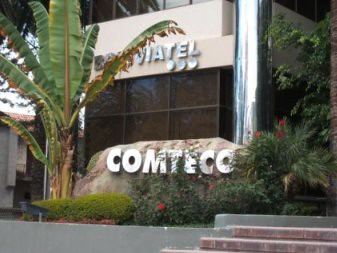
COMTECO HQ, Cochabama Bolivia

As the Bolivia market report from telecoms industry watchers Buddecomm notes, the Andean country is one of South America's poorest and least developed. According to Buddecomm's figures, Bolivia has the continent's lowest mobile penetration and second lowest fixed line teledensity. With regard to the former measure, data from the the World Cellular Information Service supports this claim. WCIS indicates that the country's mobile penetration stood at just 60.08% as of the end of September this year. Most other countries in South America's less affluent northern region show much higher numbers, for example:
  • Venezuela - 105.98%
  • Ecuador - 91.35%
  • Colombia - 83.75%
In the more prosperous Conosur region, the numbers tend to be higher still, for example:
  • Uruguay - 117.10%
  • Argentina - 115.97%
  • Chile - 98.33%
Certainly, Bolivia seemed to be a visibly less affluent country than others I have been able to visit in the region. Although I did spend one night in the capital, La Paz, in order to make an early flight on to Caracas (via Lima), my meetings were elsewhere. The cities I visited were Santa Cruz and Cochabamba. The former city is Bolivia's most populous and is at the heart of the country's economic activity. The latter city is Bolivia's third largest settlement, set in an Andean valley, with a magnificent backdrop of mountain peaks.

As described in the most recent post here, the purpose of my tour around South America was to drum up support for the Americas Com conference and exhibition, the success of which it was one of my tasks to contribute towards until last year. In the other countries I visited, it was sufficient to spend time just in their capital cities, travelling between meetings by taxi. This would not have worked in Bolivia, where in the wireline space, at least, the telecommunications market is highly fragmented.

In Bolivia, a national incumbent fixed line operator - Entel - does exist. This was renationalised by the left wing administration of President Evo Morales just weeks after we visited the company's Santa Cruz office. My understanding, however, is that the majority of the country's PSTN subscriptions are with the numerous cooperatives. We felt it could be useful to visit some of these. In Santa Cruz, we were received at the offices of COTAS (Cooperativa de Telecomunicaciones Santa Cruz). In Cochabamba, we visited the headquarters of COMTECO (Cooperativa de Telecomunicaciones Cochabamba).

LATAM12
Entel offices, Santa Cruz, Bolivia

As with the visit to Paraguay's COPACO described in the most recent previous article here, conversations with the representatives of these cooperatives (about how they might contribute to our conference) were strikingly unlike those we had at the offices of private sector telcos elsewhere in South America. Again, the themes to which our contacts warmed most readily were around bridging the digital divide and extending the availability of affordable basic services to poorer and more remotely located users.

While none of these cooperatives have constructed mobile networks, COTAS is able to compete in the cellular space. Bolivia is a rare case of a South American country in which even one MVNOs is in existence - and that MVNO is the mobile offering of COTAS, hosted by Nuevatel (which operates under the Viva brand), an MNO once owned by John Stanton's Western Wireless.

LATAM14
Nuevatel HQ, Santa Cruz, Bolivia

That COTAS is able to operate as an MVNO is not due to any particular encouragement on the part of the Bolivian telecoms regulator. A 2006 report from Diamond Consultants asked whether conditions, at that time, were right for the emergence of MVNOs in India. I'll admit that I haven't yet read this report very carefully, but perhaps it's safe to guess the answer might have been 'no'. After all, as recently as March this year, DevelopingTelecomsWatch was reporting on continued regulatory wrangles which looked set to delay the market entry of MVNOs in India. As part of its discussion, the Diamond Consultants report makes remarks about the state of play for MVNOs in some other markets around the world. Bolivia is observed to be a market in which the regulator has discouraged MVNOs, with policies "primarily driven by the low penetration of mobile services and the low geographic reach of the network." It is further argued that "low ARPUs meant that the discount MVNO model was not viable" The regulator's stance is described as seeing "brand and data service-oriented MVNOs... encroaching on the already limited capacity" Rather than encourage MVNOs to emerge, the report observes, the Bolivian regulator "stepped in and provided incentives to mobile network operators to improve capacity and coverage". Despite this, COTAS Movil was launched in mid-2002 to complement the cooperative's existing portfolio of fixed voice, ADSL and cable TV services.

The report puts Argentina in the same category as Bolivia - markets in which the entry of MVNOs is discouraged by regulatory agencies. Despite this, MVNO services have been launched there. As with Bolivia, this has been done by telecoms cooperatives.

Now, according to TeleGeography, a federation of telecoms coops, Fecosur, is planning to expand the reach of these mobile services, expecting to extend coverage to around 150 cities and municipalities across the country within four or five months. According to the federation’s president, Antonio Roncoroni, the service is already provided in 14 cities throughout the country under the 'Nuestro' banner. Fecosur and another body, Fecotel, jointly represent around 300 telecoms cooperatives across the country.

Having mused here more than once in the past about Latin America's cooperatives and about telcos renationalised by left-of-centre governments - and about how these organisations appear to operate a little differently from those for whom shareholder value is a key consideration - it will be interesting to observe whether this new mobile offering will have any very significant impact on the Argentinean market.

Others who finds the telecoms coops of Latin America at all interesting might like to look over a scholarly paper (dated 2005) from the The Journal of Community Informatics which I found recently and which rounds up the history of the Argentinean cooperatives quite nicely.

As the English winter draws in, thoughts of sunny days touring Latin America's telcos in the balmy days of April 2008 are quite attractive. Hence these musings today.

Share/Save/Bookmark

Wednesday, 17 June 2009

Ecuador's struggling CDMA MNO set to be rescued by a strategic partner?


Back in late January, I wrote (on my former blog, since handed over to a former colleague) about how Ecuador's struggling state-owned CDMA mobile operator Alegro PCS was the subject of reported offers for prospective strategic partnerships from Uruguay's Antel, and Venezuela's Movilnet, both of which are also owned by the Governments of their respective countries. I noted then that these offers both came from countries which, like Ecuador, have left-of-centre governments. This prompted me to mull over the subject of the possible telecoms sector links between politically sympathetic Latin American countries which I'd learned something about on my own travels in that part of the world. It's a topic I personally find quite interesting, so I took the opportunity to expand on this theme here in March.

Today, thanks to TeleGeography, I received an update on the news item which set this train of thought in motion - the state of play at the ailing Ecuadorean cellco. In January, I'd reported news that Alegro PCS was said to be 60 to 90 days away from reaching an agreement with a foreign strategic investment partner. This has clearly taken a bit longer than anticipated to play out. Today's news from TeleGeography suggests that the cellco is now still "approximately two months away from reaching an agreement" with a partner. The article does not clarify which company this partner is likely to be, simply repeating the ones mentioned at the start of the year, which included Telekomunikasi Indonesia (Telkom) as well as the Venezuelan and Uruguayan parties. The fact that this back on the news wires, however, might suggest that some progress is being made.

If a deal of this sort is not reached, it looks as though the Ecuadorean Government will force the sale of Alegro PCS, according to the country's President, as quoted in the TeleGeograpy article, which also notes that the CDMA operator has had to delay a plan to roll out GSM infrastructure due to a lack of capital and is instead currently using wholesale GSM capacity from larger rival Movistar Ecuador. This move has yet to make a significant impact on the operator's feeble market share. When I first visited this story in January, Alegro PCS had just 1.31% of the country's mobile subscriptions according to December 2008 figures from WCIS. That figure had improved only very slightly to 1.34% by March this year.

With high reported debts and such a tiny share of the market in a country of just 14 million people, I wonder how attractive Alegro PCS is going to look to any prospective buyer if a sale does become necessary in the view of the Government. The toughness of the competitive environment is compounded by the fact that in addition to Telefónica-backed Movistar, the Ecuadorean market is home to an MNO which is part of the powerful América Móvil group, a venture of Mexican multi-billonaire Carlos Slim Helú. It gets worse. The country's 87.15% mobile penetration rate does not leave boundless room for growth, even for the two powerhouse-backed operators currently splitting the bulk of the market between them.

So it remains to be seen what the future holds for struggling Alegro PCS. I can't decide if rescue from a telco owned by the state agencies of some politically sympathetic government will ensure the long term survival of the MNO or just delay, at some cost to the friendly partner, the eventual demise of a company caught between the vastly superior resources of two powerful competitors. I'll have to have a look some time to see if there's a precedent anywhere else in Latin America for a cello successfully competing with both of the region's two dominant telecoms groups in a relatively small market. It sounds like a tough position to be in.
Share/Save/Bookmark

Friday, 29 May 2009

Where will MNP go live in 2009? How should MNOs respond?

With Mobile Number Portability now about to hit the Indian market, the country's technology media are following the debate about how much impact this is likely to have.

Jatinder Singh, writing for Voice & Data magazine, notes that MNP has been a long time coming:

"After years of discussions and apprehensions by major telecom operators, MNP or mobile number portability, is finally going to make inroads into the Indian telecom market. [The] TRAI has approved the pan-India implementation of MNP, and [the] DoT has framed the timeline of its implementation; it is expected to hit the market by year-end."

Singh notes that MNP will be phased in piecemeal, region by region, starting with Delhi, Mumbai, Kolkatta and Chennai, with nearly 18% of the total cellular subscriber base given the option to change service providers while retaining their current mobile numbers. Singh also expresses the opinion that MNP may force operators to improve quality of service in order to avoid losing customers to rival MNOs.

So, how seriously are India's operators taking MNP in terms of threats and opportunities it might create? A range of views are reported in Jatinder Singh's article:

Kuldeep Goyal, Chairman and MD of BSNL, which currently occupies 4th place in terms of mobile market share with 11.95% of subs according to WCIS, seems upbeat about MNP, saying "It would certainly offer opportunities in the Indian telecom market. We are positive with our market share and would be eyeing more customers once things are in place."

From market-leading Bharti Airtel, Dr Jai Menon (Director, Customer Service and IT) notes that MNP has had varying levels of impact in markets worldwide.
"We are ready and believe that it allows more and more customers to come to our network and enjoy the services," says Dr Menon. Also speaking for Bharti Airtel, Deputy CEO Sanjay Kapoor told the Business Standard earlier this month, that MNP "is more relevant in countries where you have long-term contracts", going on to explain that because "India is a prepaid market... number portability won’t be a game-changing opportunity for anybody." For Kapoor, the vast, price-sensitive prepaid segment is already so inclined to regular churn with "the exit and entry cost on prepaid connections... so low", that he does not believe MNP "really adds to value."

It is, perhaps, tempting to assume that a newer market entrant would be welcoming MNP much more enthusiastically, mindful of an improved opportunity to grab customers from established rivals.

Raymond Yu of telecoms think tank Ovum, writing earlier this month, however, contends that all MNOs are vulnerable to MNP-driven churn. He cites the cases of Greece and
Lithuania, where the largest operators actually managed to increase their market shares immediately following the introduction of MNP. Yu also recalls the case of Hong Kong, where although all MNOs experience a large number of ports, "this is not unique to the customers of the market leaders."

In India, considerations of this kind may account for the apparently quite muted repsonse of new kid on the block Sistema Shyam Teleservices. The Voice & Data article quotes Vseovolod Rozanov, the company's CEO, as saying "it is more of an opportunity than a threat. However, looking at the experiences of global markets, the influence on change in the market share is not very dramatic." This is not to suggest, however, that Rozanov is completely disinterested in MNP. In a recent Economic Times article he is quoted as saying "
number portability will... drive growth for us." The Sistema-backed operation, which has now harmonised its brand with that of the giant Russian cellco which is part of the same group, has, according to WCIS, yet to break the 1% mark in terms of market share.

The Bharti Airtel CEO's comments about market conditions in India somewhat diminishing the relevance of MNP are echoed, to a degree, by remarks made by the head of the telecoms regulatory agency in Uganda. In this case, however, market size rather than the behaviour of prepaid users is being put forward as the argument against imminent deployment of MNP.

A recent Cellular News story quotes
Patrick Masambu, Executive Director of the Uganda Communications Commission, as saying that "at this stage, number portability is not something we see as a remedy in this market." Mr Masambu feels that the Ugandan market needs to grow further before the costs could be justified. He added, however though that once the country has passed the 10 million subscriber mark, then MNP could be viable. I find it a little curious that Mr Masambu chooses 10 million subs as the trigger for more actively considering MNP. If you read his comments without knowing the size of the Ugandan mobile market, you might imagine that the country has rather fewer than the 10 million subscriptions. According to WCIS, however, the country had 9.95 subs as of March this year. Hmmm...

In neighbouring Kenya, the deployment of MNP may also be some way off, if a recent article from the country's Standard newspaper is to be believed. The Standard's Robert Ndingwa notes that the Communications Commission of Kenya (CCK) has just three months to go before its September 2009 deadline to implement its version of number portability but states that the regulator is yet make a decision on whether to licence local number portability operators, "leaving consumers at the mercy of dominant mobile service providers." Ndingwa alleges that the CCK "prefers, instead, to hide behind its so-called principle of technology neutrality in the new market structure it introduced."

With some operators and regulators apparently lukewarm about the need for and effects of MNP, it might be worth asking whether views of this kind might mask a degree of fear about number portability. If so, Ovum's Raymond Yu dvises operators in particular not to be too worried, suggesting that each MNO must decide whether to view MNP as a threat or an opportunity and then devise an effective strategy in response.

Yu argues that "essentially, there are two ways to react to the introduction of MNP: either promote it or keep it under covers." In most cases, challenging operators would take the aggressive stance, says Yu, "whereas dominant operators are initially more reluctant to push MNP."

Yu notes that popular strategies for promoting MNP include making it a normal part of the sales process and using marketing to increase consumer awareness and perception of the facility to retain their numbers when switching providers. Strategies to defend against MNP include, according to Yu, simply not advertising it, implementing strong win-back strategies in line with porting requests and employing stronger loyalty and retention initiatives.

Let's see which of these options are chosen by MNOs in India - and in Uganda and Kenya, should MNP become a reality any time soon. According to Raymond Yu, other markets to watch for MNP deployments this year include Ecudaor, the Dominican Republic, Peru and Thailand.

Share/Save/Bookmark

Saturday, 7 March 2009

Adventures in telecoms socialism

In January, writing an article for the Com World Series blog, I discussed the links apparently being formed across Latin America by state-owned telecoms operators from countries with left-of-centre governments. The starting point was the news that Venezuelan incumbent telco CANTV was considering a strategic partnership with Ecuador's beleagured CDMA MNO Alegro PCS. I mentioned my own enjoyable trip to Caracas in April 2008, during which I had the opportunity to visit CANTV HQ. The operator had been renationalised by President Hugo Chávez in 2007. The external affairs representative whom I met was keen to tell me about how the organisation was looking to develop partnerships with telcos in politically sympathetic states such as Cuba and Nicaragua.

At that point, I was only aware of Latin America as an arena in which state-owned telecoms service providers from countries with left-leaning governments might look specifically to markets run by political fellow travellers for new opportunities.

Last month, however, I learned from a brief Global Mobile Daily report that Vietnamese operator Viettel, owned by the nation's military, has selected Huawei and Ericsson to provide equipment for expanding its networks overseas into North Korea, Cuba, and Venezuela. The report notes that the operator has yet to enter any of these markets, and states that, according to Viettel Deputy Director Tran Phuoc Minh, discussions are planned with telecoms authorities in each country.

This is just the latest move in an international expansion strategy with which Viettel has already made progress. Last month, Viettel's subsidiary in Cambodia, using the Metfone brand, officially launched mobile services. The unit is said to have over 1000 base stations supported by a 5000km fibre-optic network linking all provinces in Cambodia. The new operation reportedly attracted 500,000 subscribers in its first three months of trial services. A Saigon Times article on the operator's foray into neighbouring Cambodia indicates that the new cellco will target low-income subscribers with a wide range of low-priced services and packages. Viettel Deputy General Director Nguyen Manh Hung is quoted as saying that this approach is not only about customer acquisition but is also intended to "contribute to society".

Viettel, the article states, also announced the provision of free Internet services for nearly 1000 Cambodian schools within the next five years. Rural rollout seems to be high on the Metfone agenda, with the operating planning to "extend its coverage to Cambodia’s remote villages and islands."

Meanwhile in Venezuela, CANTV's mobile arm Movilnet is set to launch a low-cost mobile phone on the local market. A Telecompaper report this Thursday states that the device, dubbed 'El Vergatario' is the first mobile handset produced in the country. According to Movilnet President Jacqueline Faria the device will be the cheapest available in Venezuela. To be launched for Mother's Day in May, the CDMA phone will be available for VEF 30 (USD 13.95). El Vergatario will be produced at the Venezuelan Telecommunications Factory (Vetelca), a joint stock company, in which the Venezuelan state holds an 85% stake, with the remaining 15% owned by ZTE. The article suggests that Vetelca hopes to sell around 600,000 Vergatarios this year.

Movilnet's subscribers seem to be a remarkably loyal bunch and the country's mobile market overall is one in which the three competitors' share of the subscriber base has remained largely unchanged for some time. Movilnet's competitors have not remained complacent. Movistar Venezuela has been steadily migrating customers from a legacy CDMA to a newer GSM network since March 2007 and has more recently launched W-CDMA services. Digitel, owned by Venezuelan businessman Oswaldo Cisneros, is also working to roll out 3G services in two stages, starting this month, according to local news portal Ciberespacio. The operator currently offers Huawei USB modems and by mid-2009 will integrate voice and data services.

OK, comrades. That's all I have on telecom-socialism for now.
Share/Save/Bookmark