News, views and commentary from the telecoms sector across emerging markets and developing countries worldwide
Showing posts with label America Movil. Show all posts

Friday, 11 December 2009

Memories of Paraguay

In April 2008, your humble scribe had the very great pleasure of visiting four South American countries on behalf of events and business information company Informa Telecoms & Media. The purpose of the trip was to drum up additional support for the Americas Com conference and exhibition, held annually, and usually attracting a few hundred telecoms sector execs from around the Western Hemisphere.

While exhibitors, sponsors, delegates and supporting industry associations seemed to be broadly happy, it was beyond dispute that assembling a crowd which really represented the majority of the countries to the south of the USA was a challenging task. Various venues had been tried over the years - and each time, the location had a significant bearing on the size and diversity of the crowd. Mexican venues made for a group of participants drawn largely from that country, from the Caribbean islands and from some Central American markets. To host the event in Buenos Aires was to ensure that the group would consist largely of Argentineans and others from the Conosur region, the most prosperous segment of the South American continent. In both of these scenarios, delegates from the less affluent Andean countries would be rather more thin on the ground.

South America's largest and most populous country by far is, of course, Brazil. Iterations of Americas Com held in that country's most amazingly attractive conference location, Rio de Janeiro, did very well in terms of delegate numbers. Brazilian delegates - who quite rarely seemed inclined to travel in good numbers to venues outside their home country - were so numerous in Rio that a particular difficulty arose, however.

It was perfectly possible to lure a decent contingent of influential delegates from Spanish speaking countries to a conference and exhibition in Rio. For exhibitors and sponsors, however, picking them out from among the massively larger group of Brazilians could be challenging. It was tough, then, to create the perception of having assembled a genuinely multinational delegate audience.

It was with this in mind, and with the 2008 version of Americas Com scheduled once again for Rio, that a two-man delegation set out in April that year for meetings with a varied group of telecoms operators around South America. The week-long tour took in Venezuela, Bolivia, Paraguay and Argentina. Only the last of these had ever really been a source of significant numbers of senior delegates prepared to travel to our event when it was held outside their own country.

For someone who whose previous trips to South America had all been to Brazil, I found this to be a fascinating opportunity. In many ways, it felt as if the only thing these four very different countries have in common is that the official language is Spanish. Walking the streets and having meetings in Buenos Aires struck me as being a very similar experience to what one might expect in a southern European country - Spain, Portugal or perhaps Italy. Venezuela and Bolivia were strikingly different places - the people, the climate, the infrastructure: a different world.

Paraguay was, to me at least, the really unknown quantity - a country of which I knew very little aside from recollecting the name of its erstwhile dictator, Alfredo Stroessner and a those of a couple of its notable footballers, Messrs. Santa Cruz and Chilavert.

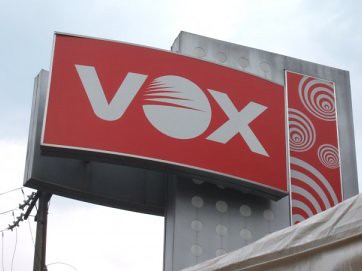
My colleague (translator/interpreter/fixer) and I did the rounds of the mobile operator HQ buildings in Asuncion. These varied a bit in terms of how expensively they were decorated, but the offices were not vastly different in arrangement or atmosphere to ones you might visit almost anywhere in the world. We were, however, on the way to airport, to visit an HQ which looked and felt rather different.
LATAM07
Vox HQ, Asuncion, Paraguay

On our travels around the seemingly quite sleepy Paraguayan capital, it became clear that the local telecoms scene was a close-knit community. Having already been shown around town by a helpful local driver who seemed to know personally everyone with whom we had a scheduled meeting, we had a nice piece of luck on our visit to one of the MNOs. The gentleman with whom we met was able to open doors at one of the organisations where we did not have an appointment fixed up. This introduction, then, led to a meeting with the Gerente Comercial of COPACO (Corporación Paraguaya de Comunicaciones), the state-owned incumbent wireline operator.

Informa's Americas region event had only recently expanded its remit from a gathering purely of GSM mobile operators. Part of our task was to increase the diversity of the audience not only in terms of countries represented but also in terms of aiming for a much broader range of telecoms businesses attending the show - fixed/mobile; state sector/private sector; involving delegates from the cable sector.

So it was wonderful to have the opportunity to visit companies in these target segments and something of an eye-opener to have conversations with the leaders of public sector operators (we also visited CANTV in Venezuela) and telecoms cooperatives, of which we managed to visit two in Bolivia.

What was novel for us was discussing the proposed themes of presentations these companies might offer at our event and hearing of topics quite different from the ones we had heard discussed by private sector GSM operators in previous iterations of the conference.
LATAM09
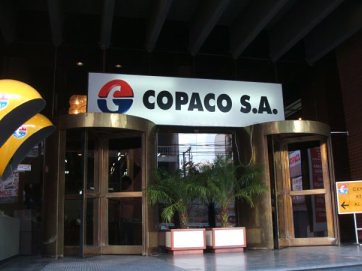
COPACO HQ, Asuncion.

COPACO, which we managed to visit just ahead of our flight to the next stop on the tour, was no exception. Our host, who was exceptionally generous with him time, was most animated when talking about how his organisation was striving to extend the availability of services to under-connected settlements. During this conversation, I couldn't help being struck by how this gentleman's language varied from what I was used to hearing at such meetings and at conferences. I don't recall hearing the terms 'EBITDA', 'shareholder value', 'market share', 'ARPU' or their Spanish equivalents during our chat. Our surroundings, too, were different. COPACO HQ lacked expensively designed marketing materials and branding. We entered through a hall in which customers could make payments. The scene there, to me at least, was somewhat reminiscent of a local government office in the UK - but before our local authorities were made to organise their activities along more commercial lines.

With this memorable discussion in mind, then, it was interesting for me to learn this week, via TeleGeography, that Millicom Cellular International-owned Tigo Paraguay has been awarded a contract to deploy mobile services in four under-served departments of the country, helping CONATEL, the national telecoms regulatory agency, achieve its universal service targets. Under the deal, Tigo will roll out networks to 35 municipalities where cellular services are currently unavailable and the Government will provide funding of around USD1.04 million to support the network deployment. In total, according to the TeleGeography item, the project is expected to cost around USD1.6 million and benefit around 20,000 Paraguayans in remote areas. The private sector, then, has a role to play in meeting some of the challenges discussed by my host on our visit to COPACO HQ last year.

COPACO itself, meanwhile, continues to harbour ambitions of entering the mobile services market. At present, according to the World Cellular Information Service, that market (the mobile penetration rate of which is 85.45%) is split as follows:
According to a recent TeleGeography story, COPACO expects to join this list by mid-2010. With my visit to the company's HQ in mind, I'll be interested to see how their mobile offering fares in competition with the existing cellcos.
Share/Save/Bookmark

Thursday, 1 October 2009

CALA region privatisation, nationalisation and liberalisation: variety is the watchword

Central America and the Caribbean: varied telecoms markets

When I wrote in late August about the quasi-nationalisation of Belize Telemedia, this was in response to being urged to do so by a Caribbean-based regular reader of this blog. That reader also suggested a number of other stories from his part of the world that I might dig into and discuss here. Alas, an extremely busy September prevented me from updating DTW as much as I ordinarily like to - and what I have written has tended to be on subjects about which it's been relatively easier to construct a discursive piece without significant research. To have done justice to any of the ideas suggested by my Caribbean correspondent would have required more thought and time than I can currently spare.

It is fortunate, then, that Tammy Parker of Informa Telecoms & Media, has rounded up some notable news items from around the Caribbean and Central America and built a useful article whose theme is an examination of very varied approaches to competition by governments in the region. I hope Ms. Parker's article, and my own reactions to it here, are of interest to this blog's most regular Caribbean-based reader and to others who visit this blog.

Parker starts with a mention of the situation in Belize, where Dean Barrow, the country's Prime Minister, has seized the 94% of the telco's shares that had been held by companies associated with British businessman and Conservative politician Michael Ashcroft. Parker reports the same twists and turns previously discussed here, but does not give space to the contention that Belize Telemedia is not actually under the control of Lord Ashcroft. That contention, some readers will recall, was made in statement from the Hayward Charitable Belize Fund posted here by an anonymous person, whom I assume to be either an employee of that Fund or of a PR firm working on its behalf.

The DevelopingTelecomsWatch article about the goings on in Belize concluded by considering the question of whether the seizure of Belize Telemedia shares would discourage pan-Caribbean mobile group Digicel (or some other likely foreign stategic telecoms sector investor) from taking an interest in the country. I wondered whether a buccaneering company such as Digicel might actually look more favourably at the Belize opportunity if it were quickly to become apparent that Mr. Barrow is earnestly trying to break a telecoms monopoly, i.e. rather than just trying to gain somehow from attacking the billionaire ally of his domestic political opponents.

Tammy Parker is not so sure. As she points out, the entire expropriation process, from initiation in the nation's legislature to the actual Government takeover, was amazingly swift, taking just two days. Parker also notes that new Belize Telemedia board members include Anwar Barrow, the son of the Prime Minister, and his mother, Lois Young, as Secretary. The Belizean Government, reports Parker, has said that it hopes the full nationalization of the company is temporary, since it would like to offer shares to other investors, to encourage investment and competition in the nation’s telecommunications market.

Parker feels, however, that potential investors will be wary of entering a country where the government "so wantonly takes command of a private business and places the prime minister's family members on the board, whether for seemingly good reasons or not." She also contends that the Government "still wants individual institutions and people to be limited to a stake in BTL of 25% or less, ensuring that none has majority control", arguing that "the ownership restriction is likely to turn off potential investors, keeping major regional players, such as America Movil, Cable & Wireless and Digicel, far from Belize's shores."

Tammy Parker then takes a look at Costa Rica, which she describes as "moving in a completely different direction by opening its long-closed telecommunications market to new entrants".

The country is apparently set to issue three mobile network licenses, probably in 2Q10, creating, for the first time, competition for the cellular business unit of incumbent monopolist telecoms operator and utilities firm ICE (Instituto Costarricense de Electricidad). As Parker notes, while ICE has excelled in building a basic landline service in Costa Rica (the nation’s fixed-line penetration exceeds that of much of Latin America), the national mobile sector is something of a laggard. According to WCIS, the mobile penetration rate across South America, Central America and the Caribbean stands at 84.45%. The figure for Costa Rica is just 57.29% - and this is not one of the region's poorer countries. Although high inflation and under-investment in the national infrastructure continue to be problems, Costa Rica has consistently been among the top Latin American countries in the Human Development Index, ranking 50th in the world in 2006. It looks, therefore, that the lack of a liberalised mobile sector, rather than any general economic malaise, is what has stifled the take-up of cellular services.

When competition does come, it may be the case that ICE will need to up its game in several areas. The company's management, for example, will hope to have moved on from what seem to be quite serious mobile network quality issues affecting subscribers right now. Two days ago, news portal Inside Costa Rica reported that ICE expects problems with coverage and SMS delivery to continue into next year. An ICE official is quoted as advising customers to make calls and send messages during off-peak hours.

The final stop on Tammy Parker's whistle-stop CALA tour is in the Bahamas, where, "more than a decade after government leaders proposed the privatization of Bahamas Telecommunications (BTC)", a process has finally been launched a process to sell a 51% stake in the company to a partner that will also gain operational control. Apparently, the plan is for fixed-line telecommunications services, including cable TV, IPTV and Internet services, to be liberalised first, with mobile services set for liberalisation two years after the privatisation of the incumbent telco.

The new investor in the Bahamian telcoms firm will face some challenges right away. According to Neil Hartnell, writing last month for local newspaper the Tribune, BTC has seen the revenues derived from its international long distance business fall by 80.7% between 2004-2008. VoIP offerings from local firm IndiGo Networks as well as from the likes of Skype, Vonage and magicJack are blamed for this collapse. This has caused BTC to approach the recently incorporated Bahamian utilities regulator, asking for fixed-line international calls to be removed from the list of services in which the telco is deemed to have significant market power.

"Given the alternatives available to end users with respect to outgoing international long distance services, there is a case to be made to have international long distance excluded from the basked (sic) of price-regulated services," BTC said. "The inclusion of outgoing international long distance as part of price regulated services impedes BTC's ability to compete with licensed and unlicensed operators."

Tammy Parker's article concludes with the observation that "it will take time to assess which of these three countries will be most successful at bringing about the sought-after improvements in its telecoms market." Parker feels that "not only are their different approaches likely to yield vastly different results, but thorough execution of their plans will be paramount to generating the changes that they seek."

For those interested in the CALA region then, I guess it will be necessary to keep watching. DTW will try to do likewise.


Share/Save/Bookmark

Saturday, 19 September 2009

M&A mystery tour: Zain, Tigo Sri Lanka, Vivendi's foray into Brazil

Zain Group: all operations up for grabs?

Over the (northern hemisphere) summer months, this blog became very preoccupied with whispers about a 'for sale' sign supposedly being slapped onto the African assets of Kuwait-headquartered mobile group Zain. So much so that an inelegant title (Zain Africa Speculation Watch) was cobbled together for what quickly became a series of articles. That series ran to no less than thirteen episodes, such was the number of conflicting rumours doing the rounds from June to August. Of late, though, this long-running tale has meandered in a new direction - towards the idea that a significant stake in the whole Zain group may be sold, not merely its operations in Africa.

A reading of media reports coming out this week suggests this is looking increasingly likely. One such comes from Tom Gara, writing for the UAE's English language newspaper, the National. Gara reports that the Kuwaiti group leading the sale has announced that it will sell its stake in Zain to a consortium of Indian and Malaysian investors. The Kharafi Group - whose other activities include construction, civil engineering and the manufacturing of consumer goods - officially owns about 10% of Zain, writes Gara, but is believed by analysts to control up to 25% of the telecoms firm through subsidiaries and associates.

Gara reports that on Tuesday this week, a Kharafi subsidiary ran an advertisement in Kuwaiti newspapers, inviting investors owning fewer than 300,000 Zain shares to participate in the sale. "We hope that this preserves the rights and interests of small shareholders and gives them priority," the advertisement said.

What of the prospective purchasers? Gara describes them as a consortium led by India’s Vavasi Group and backed by Malaysian billionaire Syed al Bukhary. This consortium has apparently indicated that a purchase price has yet to be confirmed.

Gara also states that "two large Indian state-owned telecommunications companies that were originally listed as members of the consortium have since denied making any decision on the deal." Regular readers will surely know that this refers to MTNL and BSNL. The latter, says Shauvik Ghosh of Indian business newspaper Mint, writing earlier this week, may not want to pick up a stake in Zain because of an urgent need to hold on to its cash to maintain interest earnings, to pay for 3G spectrum and to fund an ongoing restructuring programme critical for long-term profitability. The last point certainly chimes with the critical analyses of BSNL's performance reported here at DTW.

The Mint article also quotes analysts who are similarly critical of the state of BSNL. One of these, who remains anonymous, warns that the public sector telco would be advised to stay away from the Zain stake purchase. "BSNL has a lot of cash on its books but it lacks the ability to execute," he says. "Africa is not a market for an operator to just add some revenue to its balance sheet. They have to first show that they can execute in India with the opportunities already in front of them like broadband and 3G before they can venture into bigger game like Zain."

One foreign adventure which certainly seems not to be on the cards for BSNL is its mooted purchase of the Millicom International Cellular operation in Sri Lanka. On Wednesday, India's Economic Times carried the news that the state-owned firm had bid for the Tigo-branded cellco. By Friday, the Business Standard was reporting that this bid had been rejected. "They have not considered our bid", BSNL Chairman Kuldeep Goyal told a reporter. "We had quoted a value [that] we thought was appropriate but it has fallen short of their expectations."

This blog recently opined about the likely consolidation of the fiercely competitive Sri Lankan mobile market, with one possibility being that Bharti Airtel could purchase the Tigo-branded MNO - the giant Indian operator already has an operation in Sri Lanka. The recent Business Standard article also mentions rumours of Bharti Airtel's interest in the transaction - as well as interest from another prospective purchaser already present in the Sri Lankan market, Malaysia's Axiata. The only seemingly interested party still being mentioned whose presence in Sri Lanka would not lead to market consolidation is the UAE's Etisalat, which is also mentioned in the Business Standard story. Total Telecom reported on Monday that the Emirati firm has indeed submitted a bid.

Plenty of interest in Tigo Sri Lanka, then. Let's see who prevails.

What news, though, of erstwhile protagonists from the early episodes of the now-fizzled out Zain Africa Speculation Watch mini-series here at DTW? Regular readers may recall that the whole hoo-ha was initially set off by rumours of interest from French telecoms and media conglomerate Vivendi. Having heard nothing since about that the company's plans, I was interested this week to read a report from my former colleague at Informa Telecoms & Media, Mr James Middleton. While the Zain Africa business came to nothing, James writes that the French group seems to remain keen on increasing its footprint in emerging markets beyond Morocco, where it controls Maroc Telecom. Vivendi, perhaps best known by telecoms watchers for its controlling stake in French cellco and broadband player SFR, has now launched a EUR 2 billion offer for 100% of Brazilian fixed line carrier GVT, which offers VoIP telephony, corporate data, broadband, internet services and pay TV, writes James.

As of June 30, 2009, GVT had approximately 2.3 million customer lines in service, including voice, broadband, data and VoIP services. It is one of the smaller players competing against giants like Oi, América Móvil and Telefónica.

So, after wandering across Africa, South Asia and South America, here concludes another whistle-stop tour of telecoms M&A stories from emerging markets. Let's see which of these has further to run.


Share/Save/Bookmark

Wednesday, 17 June 2009

Ecuador's struggling CDMA MNO set to be rescued by a strategic partner?


Back in late January, I wrote (on my former blog, since handed over to a former colleague) about how Ecuador's struggling state-owned CDMA mobile operator Alegro PCS was the subject of reported offers for prospective strategic partnerships from Uruguay's Antel, and Venezuela's Movilnet, both of which are also owned by the Governments of their respective countries. I noted then that these offers both came from countries which, like Ecuador, have left-of-centre governments. This prompted me to mull over the subject of the possible telecoms sector links between politically sympathetic Latin American countries which I'd learned something about on my own travels in that part of the world. It's a topic I personally find quite interesting, so I took the opportunity to expand on this theme here in March.

Today, thanks to TeleGeography, I received an update on the news item which set this train of thought in motion - the state of play at the ailing Ecuadorean cellco. In January, I'd reported news that Alegro PCS was said to be 60 to 90 days away from reaching an agreement with a foreign strategic investment partner. This has clearly taken a bit longer than anticipated to play out. Today's news from TeleGeography suggests that the cellco is now still "approximately two months away from reaching an agreement" with a partner. The article does not clarify which company this partner is likely to be, simply repeating the ones mentioned at the start of the year, which included Telekomunikasi Indonesia (Telkom) as well as the Venezuelan and Uruguayan parties. The fact that this back on the news wires, however, might suggest that some progress is being made.

If a deal of this sort is not reached, it looks as though the Ecuadorean Government will force the sale of Alegro PCS, according to the country's President, as quoted in the TeleGeograpy article, which also notes that the CDMA operator has had to delay a plan to roll out GSM infrastructure due to a lack of capital and is instead currently using wholesale GSM capacity from larger rival Movistar Ecuador. This move has yet to make a significant impact on the operator's feeble market share. When I first visited this story in January, Alegro PCS had just 1.31% of the country's mobile subscriptions according to December 2008 figures from WCIS. That figure had improved only very slightly to 1.34% by March this year.

With high reported debts and such a tiny share of the market in a country of just 14 million people, I wonder how attractive Alegro PCS is going to look to any prospective buyer if a sale does become necessary in the view of the Government. The toughness of the competitive environment is compounded by the fact that in addition to Telefónica-backed Movistar, the Ecuadorean market is home to an MNO which is part of the powerful América Móvil group, a venture of Mexican multi-billonaire Carlos Slim Helú. It gets worse. The country's 87.15% mobile penetration rate does not leave boundless room for growth, even for the two powerhouse-backed operators currently splitting the bulk of the market between them.

So it remains to be seen what the future holds for struggling Alegro PCS. I can't decide if rescue from a telco owned by the state agencies of some politically sympathetic government will ensure the long term survival of the MNO or just delay, at some cost to the friendly partner, the eventual demise of a company caught between the vastly superior resources of two powerful competitors. I'll have to have a look some time to see if there's a precedent anywhere else in Latin America for a cello successfully competing with both of the region's two dominant telecoms groups in a relatively small market. It sounds like a tough position to be in.
Share/Save/Bookmark

Sunday, 10 May 2009

Report tips China Mobile, MTN, America Movil as 'best postioned to grow' - but does not consider Middle Eastern, Indian players

graphic from Telegeography's GlobalComms Insight


New research from TeleGeography’s GlobalComms Insight includes predictions about wireless and broadband subscriber growth globally for the next five years. A key finding seems to be that "growth in the value of the telecoms services market will not keep pace with subscriber growth." This feels right. As the report authors note, subscriber growth these days largely comes from countries with very low GDP per capita - i.e. emerging markets.

This is all fine. I am curious, however, to know how the people behind TeleGeography's GlobalComms Insight selected the eight leading service providers studied in the report and positioned on the graph above. It is not without value to consider the global competitive position and the growth prospects of China Mobile, MTN, America Movil, Vodafone, Telefonica, Verizon, BT and NTT. But wouldn't this report be a lot more interesting if telcos headquartered in the Middle East were put into the mix? I hear so many people articulating the view that these relatively cash-rish players are among the best placed to take advantage of the current challenging economic climate - in terms of finding and securing acquisition targets at knock down prices from sellers wanting to raise cash ASAP.

Where, then, would Etisalat, QTel or Zain sit on the graph?

One aspect of this report which does seem useful is ensuring that China Mobile is discussed. The authors call the giant cellco "one company that has managed to buck the general trend, thanks to the blistering mobile subscriber growth in its home market" and note that even this company, "the world’s largest wireless service provider by subscribers is feeling the pressure, as evidenced by last week’s news that it will expand its global footprint by buying a stake in FarEasTone of Taiwan."

I'd also be interested to see where the report authors would place Bharti Airtel in their calculations. Back in February, I considered the view that the rapidly diversifying market-leading Indian MNO might likewise be compelled by competitive pressures at home to look more seriously at international growth opportunities.
Share/Save/Bookmark
