News, views and commentary from the telecoms sector across emerging markets and developing countries worldwide
Showing posts with label Entel (Bolivia). Show all posts

Tuesday, 15 December 2009

More musings on a latin t(r)ip

The most recent article here was both a round up of some recent news from Paraguay and a trip down memory lane. I reminisced fondly about an interesting tour of four South American countries which I enjoyed last year. In doing so, I mentioned in passing the two telecoms cooperatives I was able to visit in Bolivia.

LATAM17
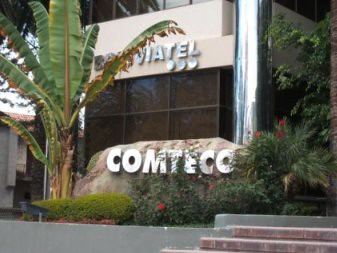
COMTECO HQ, Cochabama Bolivia

As the Bolivia market report from telecoms industry watchers Buddecomm notes, the Andean country is one of South America's poorest and least developed. According to Buddecomm's figures, Bolivia has the continent's lowest mobile penetration and second lowest fixed line teledensity. With regard to the former measure, data from the the World Cellular Information Service supports this claim. WCIS indicates that the country's mobile penetration stood at just 60.08% as of the end of September this year. Most other countries in South America's less affluent northern region show much higher numbers, for example:
  • Venezuela - 105.98%
  • Ecuador - 91.35%
  • Colombia - 83.75%
In the more prosperous Conosur region, the numbers tend to be higher still, for example:
  • Uruguay - 117.10%
  • Argentina - 115.97%
  • Chile - 98.33%
Certainly, Bolivia seemed to be a visibly less affluent country than others I have been able to visit in the region. Although I did spend one night in the capital, La Paz, in order to make an early flight on to Caracas (via Lima), my meetings were elsewhere. The cities I visited were Santa Cruz and Cochabamba. The former city is Bolivia's most populous and is at the heart of the country's economic activity. The latter city is Bolivia's third largest settlement, set in an Andean valley, with a magnificent backdrop of mountain peaks.

As described in the most recent post here, the purpose of my tour around South America was to drum up support for the Americas Com conference and exhibition, the success of which it was one of my tasks to contribute towards until last year. In the other countries I visited, it was sufficient to spend time just in their capital cities, travelling between meetings by taxi. This would not have worked in Bolivia, where in the wireline space, at least, the telecommunications market is highly fragmented.

In Bolivia, a national incumbent fixed line operator - Entel - does exist. This was renationalised by the left wing administration of President Evo Morales just weeks after we visited the company's Santa Cruz office. My understanding, however, is that the majority of the country's PSTN subscriptions are with the numerous cooperatives. We felt it could be useful to visit some of these. In Santa Cruz, we were received at the offices of COTAS (Cooperativa de Telecomunicaciones Santa Cruz). In Cochabamba, we visited the headquarters of COMTECO (Cooperativa de Telecomunicaciones Cochabamba).

LATAM12
Entel offices, Santa Cruz, Bolivia

As with the visit to Paraguay's COPACO described in the most recent previous article here, conversations with the representatives of these cooperatives (about how they might contribute to our conference) were strikingly unlike those we had at the offices of private sector telcos elsewhere in South America. Again, the themes to which our contacts warmed most readily were around bridging the digital divide and extending the availability of affordable basic services to poorer and more remotely located users.

While none of these cooperatives have constructed mobile networks, COTAS is able to compete in the cellular space. Bolivia is a rare case of a South American country in which even one MVNOs is in existence - and that MVNO is the mobile offering of COTAS, hosted by Nuevatel (which operates under the Viva brand), an MNO once owned by John Stanton's Western Wireless.

LATAM14
Nuevatel HQ, Santa Cruz, Bolivia

That COTAS is able to operate as an MVNO is not due to any particular encouragement on the part of the Bolivian telecoms regulator. A 2006 report from Diamond Consultants asked whether conditions, at that time, were right for the emergence of MVNOs in India. I'll admit that I haven't yet read this report very carefully, but perhaps it's safe to guess the answer might have been 'no'. After all, as recently as March this year, DevelopingTelecomsWatch was reporting on continued regulatory wrangles which looked set to delay the market entry of MVNOs in India. As part of its discussion, the Diamond Consultants report makes remarks about the state of play for MVNOs in some other markets around the world. Bolivia is observed to be a market in which the regulator has discouraged MVNOs, with policies "primarily driven by the low penetration of mobile services and the low geographic reach of the network." It is further argued that "low ARPUs meant that the discount MVNO model was not viable" The regulator's stance is described as seeing "brand and data service-oriented MVNOs... encroaching on the already limited capacity" Rather than encourage MVNOs to emerge, the report observes, the Bolivian regulator "stepped in and provided incentives to mobile network operators to improve capacity and coverage". Despite this, COTAS Movil was launched in mid-2002 to complement the cooperative's existing portfolio of fixed voice, ADSL and cable TV services.

The report puts Argentina in the same category as Bolivia - markets in which the entry of MVNOs is discouraged by regulatory agencies. Despite this, MVNO services have been launched there. As with Bolivia, this has been done by telecoms cooperatives.

Now, according to TeleGeography, a federation of telecoms coops, Fecosur, is planning to expand the reach of these mobile services, expecting to extend coverage to around 150 cities and municipalities across the country within four or five months. According to the federation’s president, Antonio Roncoroni, the service is already provided in 14 cities throughout the country under the 'Nuestro' banner. Fecosur and another body, Fecotel, jointly represent around 300 telecoms cooperatives across the country.

Having mused here more than once in the past about Latin America's cooperatives and about telcos renationalised by left-of-centre governments - and about how these organisations appear to operate a little differently from those for whom shareholder value is a key consideration - it will be interesting to observe whether this new mobile offering will have any very significant impact on the Argentinean market.

Others who finds the telecoms coops of Latin America at all interesting might like to look over a scholarly paper (dated 2005) from the The Journal of Community Informatics which I found recently and which rounds up the history of the Argentinean cooperatives quite nicely.

As the English winter draws in, thoughts of sunny days touring Latin America's telcos in the balmy days of April 2008 are quite attractive. Hence these musings today.

Share/Save/Bookmark

Thursday, 12 February 2009

Millicom's global emerging markets strategy examined


Following my recent posts here regarding 2008 results and 2009 forecasts from the emerging markets components of the Telenor and TeliaSonera businesses, I would like to examine the performance of a company whose main focus is to provide affordable, widely accessible and readily available prepaid cellular telephony services in developing countries.

In April 2008, I spent an enjoyable two weeks visiting a very diverse range of telecoms service providers in four South American countries. At the time, I was responsible for the development of the Informa Telecoms & Media-produced annual Americas Com conference and exhibition, part of the Com World Series, a global suite of emerging markets-focused telecoms sector networking and discussion events. In the case of Americas Com, which under my watch was held twice in Rio de Janeiro, we were working to broaden the audience. Formerly known as GSM Americas, the event had a strong track record of gathering executives from mobile operators, particularly from Brazil and the Cono Sur countries of Argentina, Chile and Uruguay. I was keen to connect with prospective speakers and delegates from less well-represented countries. Another priority was to reach out to wireline operators of various kinds. Across the four countries I visited, therefore, I had meetings with people from national incumbent long-distance carriers, several cooperative-owned LECs and a cable MSO - as well as with MNOs on every stop of the tour.

In Paraguay and Bolivia, I met with very friendly people working for the Tigo-branded mobile operations of Luxembourg-headquartered Millicom International Cellular. For someone trying to secure top-level conference speakers, Millicom is a tough nut to crack. Having their executives speak in a public forum about company strategy or the company's view of technology choices is not something the group seems enthusiastic about.

This week, as picked up by Telecompaper, Millicom released Q4 2008 results and discussed its plans for the year ahead. The company reported fourth-quarter EBITDA up 31% percent from a year earlier to USD 406 million and revenues up 18% to USD 907 million.

Millicom met its target for an EBITDA margin of 45% in the period, but net profit fell to USD 66 million from USD 113 million a year ago, due to a net charge of USD 55 million for tax and forex losses. Total subscribers rose to 32.0 million at year-end from 30.6 million in the third quarter.

The company plans capital spending of USD 1 billion in the current year, down from USD 1.4 billion in 2008. Millicom says that it also plans to lower OPEX due to the challenging economic environment, and also expects a continued impact on results this year from the stronger US dollar. The cellco is also aiming to scale back its promotions in Latin America to focus more on higher value customers. Millicom says this is due to slowing subscriber growth in increasingly penetrated markets.

For me, this is very familiar territory. I have lost count of the number of presentations I have heard from companies in the broad customer management/billing/CRM space which urge operators in developing countries to be ready for market maturity. The mantra tends to go something like this: identify the highest-value customers, decide if you want to keep the less profitable ones (or have your competitors handle them), maximise the value of every customer, prevent churn.

In a number of the Latin American countries in which Millicom competes, market conditions do indeed seem to be at the stage where these kinds of issues need to be treated with some urgency. El Salvador broke the 100% mobile penetration barrier in December, up from 77.59% a year before. Other highly penetrated markets in the Millicom footprint include Guatemala (84.49%), Honduras (79.25%), Paraguay (81.21%) and Colombia (90.71%). In the Latin American arm of the Millicom empire, Bolivia stands out as a market with rather more room for growth, mobile penetration having reached 51.32% by December 2008, up from 40.96% one year earlier.

I am not clear whether Millicom intends to sharpen the focus on higher-value customers even in somewhat under-penetrated Bolivia - or whether reaching less affluent, lower ARPU population segments remains a priority there. If Tigo Bolivia does not go after these segments, there are other players who may be keen to step in.

It was in Bolivia that I met representatives of telecoms cooperatives. Collectively, these co-ops are the leading providers of local fixed telephony, ahead of recently renationalised national incumbent long-distance carrier Entel. The two co-ops we visited also bundle pay-TV services with fixed voice. Several of them offer mobile services as MVNOs. For me, the visits to co-ops in Santa Cruz (COTAS) and Cochabamba (COMTECO) were as much about fact-finding as about banging the drum for our Americas Com conference. I knew little about how these purely local telcos are organised and what their strategies are. I learned that a component of those strategies is to reach outlying settlements and bridge the urban-rural digital divide.

Moving north, Central America is home to the one Millicom holding which bucks the trend of building and buying mobile operations only. In this week's report, the company said that the fixed-line business it acquired in July last year is performing as expected.

This asset, the triple play cable TV group Amnet, operates coaxial and FTTH networks in Guatemala, Honduras, El Salvador, Nicaragua and Costa Rica. When this acquisition was confirmed, Global Mobile Daily speculated that "the move would appear to be aimed at Tigo being able to offer quadplay services in Latin America."

This week's report from Millicom indicates that the company is enjoying improving margins in Africa, where it plans to sell its Sierra Leone operation. I was curious about why Millicom would want to sell one African operation so soon after buying a licence in another market - in November the company announced it has been awarded the third national mobile licence for Rwanda.

On the face of it, Sierra Leone does not appear to be a wholly unattractive market. Mobile penetration has grown strongly in recent years - from 5.45% at year-end 2005 to 29.87% by December 2008, a figure which leaves good growth potential to be exploited. However, Sierra Leone is the lowest ranked country on the Human Development Index and seventh lowest on the global Human Poverty Index, and is known to suffer from endemic corruption - a challenging place to do business. Millicom has also fared less well than most of its rivals in the Sierra Leone market. Currently, the Tigo operation lags far behind market-leading Africell (36.04% market share), 2nd placed Comium Sierra Leone (31.78%) and 3rd placed Zain Sierra Leone (24.80%). Tigo's market share? Just 7.38%, ahead of only chronic laggard Datatel (0.01% ).

Millicom is not really going in the right direction in the battle for market share in Sierra Leone. In December 2005, Tigo had 9.15% of subscriptions. This fell to 7.92% a year later, rose to 9.17% by December 2007 and then dropping off again over the last twelve months.

Millicom generally does rather better in the smaller markets it serves, enjoying the top spot in El Salvador (pop. 7 million), Guatemala (pop. 13 million), Honduras (pop. 8 million) and Paraguay (pop. 7 million). It looks to me as though the combination of a small overall market size and a long struggle to carve out a decent chunk of that has finally made Millicom go cold on Sierra Leone in these challenging times.

Another market in which the company faces challenges is Senegal. In November, Global Mobile Daily reported that Millicom had begun arbitration proceedings with the International Center for the Settlement of Investment Disputes (ICSID) against the Senegalese Government, which had suspended the operator's license.

It was in the same month that Millicom announced the USD 60 million purchase of 15 year licence to operate in Rwanda. There is certainly room to grow there. Mobile penetration is low at around 13.5% and the population is only served by two incumbent operators, RwandaTel and the market-leading subsidiary of South Africa's MTN.

According to the GMD article, Marc Beuls, President and CEO of Millicom, notes that the Rwandan company can forge some synergies with its Congo and Tanzanian operations and also says that the country has a well developed road and grid infrastructure, which will enable the company to build out a network quickly and cost-effectively.

In these challenging times, Millicom seems to be an example of a telecoms group with far-flung operating units that is looking hard at these various operations and making context-specific business decisions rather than pursuing a one-size-fits-all approach to emerging markets worldwide.

Share/Save/Bookmark