News, views and commentary from the telecoms sector across emerging markets and developing countries worldwide
Showing posts with label Millicom International Cellular. Show all posts

Thursday, 22 April 2010

India: operator space to consolidate while handset market gets more fragmented?

Maarten Pieters: Vodafone India CEO predicts market consolidation

Last week, a broad range of news outlets were carrying the claim that just 31% of the population of India were known to have access to a toilet and 'improved sanitation' in 2008. This is clearly a regrettable state of affairs, with dire consequences for public health, life expectancy and economic development.

Ordinarily, however, it does not follow that the seriousness of an issue always correlates strongly with the willingness of the global media to give it coverage. It was a welcome surprise, then, to see this particular issue given some space even by the website of the thin, brightly coloured newspaper given free at UK railway stations to daily commuters such as myself. After all, this is an organ whose print version dedicates just a few pages to what I would really call 'news' - far more space is given over to celebrity tittletattle and TV listings.

How, then, did this story successfully compete for space even in that kind of context?

The key seems to have been handing the global media an compelling, ready-written headline. The person responsible for doing so in this case appears to be Zafar Adeel, Director of the United Nations University’s Canada-based think-tank, the Institute for Water, Environment and Health.

So how did Dr. Adeel manage to craft a headline sufficiently eye-catching so as to propel this important but unglamorous issue up the news agenda last week? He did so by building it around the assertion that more Indians have access to a mobile phone than to a working toilet. Presumably, the desired effect on readers in Europe and North America was to stimulate a thought process along the following lines: 'More cellphones than toilets? That's crazy! Toilets have been around forever and are one of the most basic facilities expected for a civilised life -  but the mobile phone is a recently invented luxury item.'

Such a characterisation of the mobile device would be understandable when articulated by someone who ticks the following boxes:
  • lives in a wealthy, developed country and has not had the opportunity to see mobile phones being used on the city streets or in the villages of (for example) Kenya, India or Bangladesh
  • is old enough to remember when mobile phones were seen as an expensive status symbol used only by wealthy executives
  • has not thought about how access to communications services can improve the lives of poor people by connecting them with time-saving information and services
Regular readers of this blog, and anyone working in or around the telecoms sector in emerging markets/developing countries, however, would be much less likely to think of mobile phones in this way. They would probably be inclined to realise that is precisely because developing countries have weak infrastructure that the mobile phone has rapidly become a truly vital part of the lives of even very poor people in such nations. Numerous examples of this have been decribed in DTW posts passim. Rather than trawl through all of those, readers might like to look at a nicely succinct round up of observations on this topic, made recently Anand Giridharadas, writing for the New York Times.

Giridharadas observes that there is "a global flowering of innovation on the simple cellphone" and that "from Brazil to India to South Korea and even Afghanistan, people are seeking work via text message; borrowing, lending, and receiving salaries on cellphones; employing their phones as flashlights, televisions and radios." He goes on to assert that "many do all this for peanuts", noting that "in India, Reliance Communications sells handsets for less than [USD] 25, with one-cent-a-minute phone calls across India and one-cent text messages and no monthly charge — while earning fat profits."

Readers of this blog, particularly any working in India's mobile sector, might on one hand take pride in seeing such achievements talked up but may, on the other hand, not fully recognise the idea of an industry revelling in 'fat' profits.

Certainly, the feeling in India may be that at the very low tariff levels referred to by Giridharadas, not all operators may continue to be viable. Sypmathetic to this view is Maarten Pieters, CEO Of Vodafone India. Speaking to the Economic Times last week, Pieters observed: "It’s all about scale because we have very low tariffs here. If you compared the tariffs here, it’s about 10% or what we get in Europe in the Vodafone Group as an average tariff. So, how can you survive as an operator on those low tariffs that is by creating scale and it is very clear that it will not be able for 10 people or 10 operators to create that scale, which means there needs to be some form of consolidation".

Pieters does not expect this consolidation of the mobile market to happen overnight, however, because it would not be facilitated by India's current M&A rules. "So, we first need to see some changes of the rules and then you will probably see consolidation."

Indian mobile operators, then, have to strive for profitability in an extremely tough environment. Quite often, I have heard industry watchers articulate the view that this should equip the country's cellcos very well for meeting the challenges of extracting a profit from developing countries elsewhere in the world. Also out there is the feeling that any Indian MNOs with international ambitions will need to be mindful of quite different challenges they may face.

Writing last month for telecoms.com about the purchase of Zain's African opcos by Bharti Airtel, for example, Matthew Reed observes that "Bharti will be looking to reinvent Zain Africa by introducing the low-cost business model that it has pioneered successfully in India" and "will also be hoping to achieve economies of scale across its Asian and African operations, which together will make it the fifth-largest mobile operator in the world".

Reed does offer words of caution, however, arguing that "operating in Africa does present particular challenges, some of which will be new to Bharti, despite its credentials as an emerging-market operator."

"The takeover of Zain Africa", writes Reed, "will give Bharti operations in 15 different countries, each of which has its own political and regulatory conditions, and some of which present some political risk. The diversity alone will be something new for Bharti, which only had mobile operations in India until it made recent moves into Sri Lanka and Bangladesh."

Reed also observes that while tariffs in Africa have traditonally been rather higher than those Bharti Airtel has to live with on home soil, the giant Indian cellco is entering many African markets at a time when higher levels of competition have more recently been pushing down prices. "In much of sub-Saharan Africa", Reed adds, "the infrastructure is poor and distribution is difficult."

Maarten Pieters of Vodafone India, meanwhile, is almost uniquely well qualified to make predictions about how his company's major competitor is likely to fare as it embarks on its African adventure - between 2003 and 2005, he was the CEO of Celtel International, the collection of African operators acquired by Zain and subsequently sold on to Bharti Airtel. Pieters has also served on the board of Millicom International Cellular, the multinational mobile group whose African assets currently include opcos in Chad, DRC, Ghana, Mauritius, Rwanda, Senegal and Tanzania.

Pieters offers words of encouragement: "Bharti is a very fantastic company. I really admire them. They have done a very good job in India. They have a very good management. If anyone can make a success out of the old Celtel assets, then it’s them. So, I am very happy that they are in good hands."

While, as Pieters argues, consolidation of the Indian mobile operator space may be inevitable, the handset market, conversely, seems to be becoming more fragmented. Priyanka Joshi of the Business Standard writes that "the segment has seen entry of one mobile vendor every month." For the year 2009, Joshi asserts, "new vendors registered a combined market share of 12.3% of the total 101.54 million mobile handset sales."

Examples of new market entrants offered by Joshi include Wynn Telecom. "Starting May this year, writes Joshi, "the company will launch seven dual SIM handsets priced under Rs 5000 and will also get ready to manufacture handsets in India."

Some new entrants, explains Joshi, will build a business around devices tailored to meet the needs of users in India's vast rural areas. Olive Telecommunications  is one example of a company with this strategy.

It will be interesting to observe, then, whether the mobile services and mobile handsets markets do indeed move in these opposite directions - with the former consolidating down to a smaller number of operators of scale and the latter continuing to offer opportunities for innovative new entrants.

Share/Save/Bookmark

Tuesday, 2 March 2010

The road to hell...

... is paved, as Dr. Johnson didn't ever say, with good intentions.

One such intention was set out here in the most recent DTW post, namely that this blog would review some of the predictions made in the Industry Outlook report that is made available for free downloading by Informa Telecoms & Media. The plan was to zero in on any predictions relating specifically to emerging markets and developing countries.


Two months have passed since that rash promise was made and not a peep has been heard from this once prolific blog - no fewer than 147 posts saw were published here in 2009.

Apologies, then, to anyone who has found DevelopingTelecomsWatch to be a useful source of news, commentary and speculation and who now wonders whether the blog has fizzled out of existence. Happily, for anyone that cares, this is not the case. That said, I do not expect to be writing anything like as often in 2010 than was the case last year. My commercial activities are, I am pleased to report, taking up far more time now, suggesting that this year will be more profitable than the one we have left behind us. I do hope that regular readers are facing this first year of a new decade with similar optimism.

Failure to deliver on good intentions notwithstanding, then, perhaps DTW and its writer are not on that proverbial road to hell.

What of our industry and its interests across emerging markets? Hellbound? Or good times ahead?

Belatedly, then, with two months of the new year having already passed, let's attempt to answer those questions by taking a look at a couple of the predictions made by the crystal ball gazers at Informa:

'So-called emerging markets will transition into a new phase of competition based on services and bring into question the validity of the term "emerging market" as it is understood in the telecoms sector today.'

Informa's report notes that "Until now, the term 'emerging market' in the context of the mobile sector has been used as a catch-all phrase to describe markets characterised by low penetration rates, a proliferation of mobile network operators, steep drops in the price of basic communications and resulting explosive mobile subscription growth."

This is familiar territory here at DTW. Numerous times, reference has been made to markets in which the price of mobile services has been squeezed down to a level that makes life very hard for some of the competing cellcos. In July last year, for example, this blog covered the decision of Millicom International Cellular to withdraw from all the Asian markets in which it once did business - Sri Lanka, Laos and Cambodia. The latter country certainly matches the Informa's report's reference to "a proliferation" of MNOs. No fewer than nine (!!) cellcos are currently fighting for business in a country with just 14.8 million inhabitants. Here they all are, with market share figures from Informa's WCIS product:
  1. Cellcard (GSM, 42.12% market share - the operator in which Millicom had a stake)
  2. Metfone (GSM, 18.86%, owned by Viettel of Vietnam)
  3. Mfone (GSM/W-CDMA, 15.52%)
  4. Hello (GSM, 13.38%, controlled by Axiata)
  5. Star-Cell (GSM, 3.56%, part of the TeliaSonera group)
  6. Beeline Cambodia (GSM, 2.90%, owned by Russia's Vimpelcom)
  7. qb (W-CDMA, 1.95%)
  8. Latelz (GSM, 1.32%)
  9. GT-TELL/Excell (CDMA, 0.39%)
Regular readers may have spotted that from time to time I like to share video clips of telecoms operators' TV advertisments from around the world. Latelz (AKA Smart Mobile), as the list above suggests, is one player that may need some pretty compelling advertising if it is to become a more significant player. You decide how powerfully the Smart Mobile case is made by these:


Cambodia is a pretty extreme case, perhaps, but DTW has also examined a number of African markets which seem to be ripe for mobile market consolidation. I daresay there are many more around the world in much the same state.

While I am insinctively in favour of competitive environments which offer value and choice to consumers of mobile services, I do also sympathise when I speak with employees of operators that are struggling to improve shareholder value in the context of dramatically slashed prices. These guys, it sometmes seems to me, can feel as if they are on that proverbial inferno-bound round. If Informa's prediction is on the money, however, perhaps that fiery destination need not be reached this year.

On to the next prediction with an emerging markets/developing countries angle...

'Mobile banking efforts will continue to proliferate in emerging markets, but in the short-term these will be more important as a customer acquisition and retention tool than as a genuine driver of significant new operator revenue streams.'

The efforts made to date in this area got some coverage here last year. In May we noted that giant cellco Bharti Airtel was looking to tap into the big opportunity presented by the fact that 85% of the citizens of its Indian home market do not have bank accounts. By August, readers were invited to consider whether mobile operators would necessarily dominate the market for mobile banking services aimed at turning a profit while going some way to alleviating the poverty of subscribers in developing countries. An alternative that we discussed was the possibility of operator-neutral solutions gaining traction.

The chaps at Informa were have not been alone in keeping discussions of this sort on the agenda for 2010. Indeed, mobile banking in emerging markets got a mention during the plenary session of last month's Mobile World Congress. Simon Rockman of the Register noted, however, with some distaste, "that transforming the lives of millions of people by giving them bank accounts – something that can make the difference between eating and starving - didn't garner the same round of applause" as that received by the GSMA project aimed at making every mobile phone use the same charger."

Writing up his notes from the Congress the following week, Rockman also wondered at some of the number crunching around the scale of the m-banking opportunity. He noted that day four of event saw an assembly of the mobile money working group that has received USD 12.5m from the Bill and Melinda Gates Foundation and is working towards the GSMA's target of getting 20 million of the billion people who have a mobile phone but do not have a bank account onto the first rung of the financial ladder.

Ignacio Mas, writes Rockman, gave a detailed account of what the Bill and Melinda Gates Foundation wants to achieve: "They wanted the very poor and insecure to be able to save", targeting people living on less than USD 2 per day. "As much as they have low subsistence incomes", reports Rockman, "the real problem is stability - they might only find work occasionally and have to eke out money until they next find work. Or if they are farmers they get paid seasonally at harvest time."

Without access to banks, continues Rockman, such people are very vulnerable: "They will often give the money to people they trust for safekeeping but these are people in a similar situation to themselves. Lack of stability means people get multiple jobs. They can't concentrate on what will get the best return and pull themselves out of poverty because they have to opt for stability."

This, and other challenges, blight the lives of so many people around the world that it does seem reasonable to suppose that a huge opportunity does exist for the telecoms industry to provide what the retail banking sector cannot in underdeveloped countries.

Well, I enjoyed finally finding the time to write something here after such a long hiatus - but will refrain from making rash promises about when the next article will appear. More soon, I hope, though.
Share/Save/Bookmark

Friday, 11 December 2009

Memories of Paraguay

In April 2008, your humble scribe had the very great pleasure of visiting four South American countries on behalf of events and business information company Informa Telecoms & Media. The purpose of the trip was to drum up additional support for the Americas Com conference and exhibition, held annually, and usually attracting a few hundred telecoms sector execs from around the Western Hemisphere.

While exhibitors, sponsors, delegates and supporting industry associations seemed to be broadly happy, it was beyond dispute that assembling a crowd which really represented the majority of the countries to the south of the USA was a challenging task. Various venues had been tried over the years - and each time, the location had a significant bearing on the size and diversity of the crowd. Mexican venues made for a group of participants drawn largely from that country, from the Caribbean islands and from some Central American markets. To host the event in Buenos Aires was to ensure that the group would consist largely of Argentineans and others from the Conosur region, the most prosperous segment of the South American continent. In both of these scenarios, delegates from the less affluent Andean countries would be rather more thin on the ground.

South America's largest and most populous country by far is, of course, Brazil. Iterations of Americas Com held in that country's most amazingly attractive conference location, Rio de Janeiro, did very well in terms of delegate numbers. Brazilian delegates - who quite rarely seemed inclined to travel in good numbers to venues outside their home country - were so numerous in Rio that a particular difficulty arose, however.

It was perfectly possible to lure a decent contingent of influential delegates from Spanish speaking countries to a conference and exhibition in Rio. For exhibitors and sponsors, however, picking them out from among the massively larger group of Brazilians could be challenging. It was tough, then, to create the perception of having assembled a genuinely multinational delegate audience.

It was with this in mind, and with the 2008 version of Americas Com scheduled once again for Rio, that a two-man delegation set out in April that year for meetings with a varied group of telecoms operators around South America. The week-long tour took in Venezuela, Bolivia, Paraguay and Argentina. Only the last of these had ever really been a source of significant numbers of senior delegates prepared to travel to our event when it was held outside their own country.

For someone who whose previous trips to South America had all been to Brazil, I found this to be a fascinating opportunity. In many ways, it felt as if the only thing these four very different countries have in common is that the official language is Spanish. Walking the streets and having meetings in Buenos Aires struck me as being a very similar experience to what one might expect in a southern European country - Spain, Portugal or perhaps Italy. Venezuela and Bolivia were strikingly different places - the people, the climate, the infrastructure: a different world.

Paraguay was, to me at least, the really unknown quantity - a country of which I knew very little aside from recollecting the name of its erstwhile dictator, Alfredo Stroessner and a those of a couple of its notable footballers, Messrs. Santa Cruz and Chilavert.

My colleague (translator/interpreter/fixer) and I did the rounds of the mobile operator HQ buildings in Asuncion. These varied a bit in terms of how expensively they were decorated, but the offices were not vastly different in arrangement or atmosphere to ones you might visit almost anywhere in the world. We were, however, on the way to airport, to visit an HQ which looked and felt rather different.

LATAM07
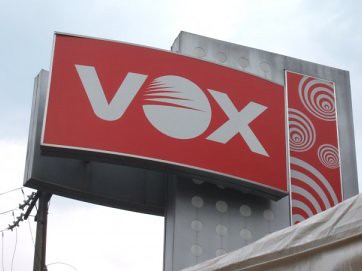
Vox HQ, Asuncion, Paraguay

On our travels around the seemingly quite sleepy Paraguayan capital, it became clear that the local telecoms scene was a close-knit community. Having already been shown around town by a helpful local driver who seemed to know personally everyone with whom we had a scheduled meeting, we had a nice piece of luck on our visit to one of the MNOs. The gentleman with whom we met was able to open doors at one of the organisations where we did not have an appointment fixed up. This introduction, then, led to a meeting with the Gerente Comercial of COPACO (Corporación Paraguaya de Comunicaciones), the state-owned incumbent wireline operator.

Informa's Americas region event had only recently expanded its remit from a gathering purely of GSM mobile operators. Part of our task was to increase the diversity of the audience not only in terms of countries represented but also in terms of aiming for a much broader range of telecoms businesses attending the show - fixed/mobile; state sector/private sector; involving delegates from the cable sector.

So it was wonderful to have the opportunity to visit companies in these target segments and something of an eye-opener to have conversations with the leaders of public sector operators (we also visited CANTV in Venezuela) and telecoms cooperatives, of which we managed to visit two in Bolivia.

What was novel for us was discussing the proposed themes of presentations these companies might offer at our event and hearing of topics quite different from the ones we had heard discussed by private sector GSM operators in previous iterations of the conference.

LATAM09
COPACO HQ, Asuncion.

COPACO, which we managed to visit just ahead of our flight to the next stop on the tour, was no exception. Our host, who was exceptionally generous with him time, was most animated when talking about how his organisation was striving to extend the availability of services to under-connected settlements. During this conversation, I couldn't help being struck by how this gentleman's language varied from what I was used to hearing at such meetings and at conferences. I don't recall hearing the terms 'EBITDA', 'shareholder value', 'market share', 'ARPU' or their Spanish equivalents during our chat. Our surroundings, too, were different. COPACO HQ lacked expensively designed marketing materials and branding. We entered through a hall in which customers could make payments. The scene there, to me at least, was somewhat reminiscent of a local government office in the UK - but before our local authorities were made to organise their activities along more commercial lines.

With this memorable discussion in mind, then, it was interesting for me to learn this week, via TeleGeography, that Millicom Cellular International-owned Tigo Paraguay has been awarded a contract to deploy mobile services in four under-served departments of the country, helping CONATEL, the national telecoms regulatory agency, achieve its universal service targets. Under the deal, Tigo will roll out networks to 35 municipalities where cellular services are currently unavailable and the Government will provide funding of around USD1.04 million to support the network deployment. In total, according to the TeleGeography item, the project is expected to cost around USD1.6 million and benefit around 20,000 Paraguayans in remote areas. The private sector, then, has a role to play in meeting some of the challenges discussed by my host on our visit to COPACO HQ last year.

COPACO itself, meanwhile, continues to harbour ambitions of entering the mobile services market. At present, according to the World Cellular Information Service, that market (the mobile penetration rate of which is 85.45%) is split as follows:
According to a recent TeleGeography story, COPACO expects to join this list by mid-2010. With my visit to the company's HQ in mind, I'll be interested to see how their mobile offering fares in competition with the existing cellcos.
Share/Save/Bookmark

Wednesday, 9 December 2009

Cambodia's mobile price war: peace in sight?

Beeline Cambodia: late entrant doing battle in a fierce tariffs war

DevelopingTelecomsWatch depends on the indispensable Phnom Penh Post for news of all things Cambodian, quoting that organ quite liberally, for example, when donning a flak jacket to report on the mobile price war which has been gripping the southeast Asian country for months.

It was also via that esteemed news outlet that DTW learned this week that the Cambodian Government has tired of waiting for the country's numerous cellcos to end to their damaging tariffs battle. A long-awaited edict setting minimum tariffs was signed by the Government last Friday, telecoms Minister So Khun is quoted as saying.

"We offered free-market principles, but operators kept having conflicts with one another, so the government needs to have a hand in it," So Khun said. The government will suspend the licence of any operators that violate the minimum tariff set by the edict, he added.

The Cambodian mobile market is currently contested by no less than nine MNOs. If there is another country with a population under 15 million whose cellular sector is split so many ways, it does not spring immediately to mind. Of that crowd of cellcos, one, so far, has reacted positively to the imposition of a minimum tariff regime. The Phnom Penh Post quotes Simon Perkins, CEO of Axiata-controlled Hello, who says he supports the initiative "to bring some structure to the telecom tariffs, in the absence of the usual competition guidelines and rules that exist in a lot of markets".

This decision, of course, comes too late for Millicom International Cellular, which announced in July that its three Asian operations (in Sri Lanka and Laos as well as in Cambodia) were to be reclassified as assets held for sale. The Luxembourg-headquartered mobile group cited problems around ongoing profitability in these Asian markets as a key reason for selling up and focusing its efforts on its African and Latin American properties. As DTW reported in the summer, Millicom CEO Mikael Grahne appeared to attribute much of the blame for deteriorating profits at Cellcard, the Cambodian cellco in which Millicom has a 58.4% stake, to the disruptive market-entry strategies of latecomers to the country's mobile arena. The same DTW piece, however, noted that another major shareholder in Cellcard does not agree with Millicom's assertion that this is negatively impacting profitability: "[There are] no concerns on profitability from our side," said Mark Hanna, CFO of Royal Group, which owns a 38.5% stake in the cellco, denying in July that margins had become tighter.

Such was the confidence of the Royal Group in this assertion that the local Cambodian conglomerate agreed to acquire Millicom's stake in Cellcard. This confidence also seems to be shared now by the Royal Group's bankers. According to a Bloomberg article earlier this month, Royal Group has hired Standard Bank Group Ltd. and Australia & New Zealand Banking Group Ltd. to arrange an 18-month bridging loan to help with the purchase of Millicom's share of the MNO.

The appetite of the Cambodian authorities for intervention in the mobile market does not end with tariff control.

Again, we are indebted to the Phnom Penh Post, this time for coverage of a debate around mobile network sharing in Cambodia.

Last month, the newspaper carried news of Minister So Khun calling for the country's MNOs to share infrastructure. So Khun said the initiative would avoid duplication of infrastructure, thereby reducing costs across the sector, as well as moderating the effect that mobile base stations are having on their surroundings.

"We do not want to see too many antennas dotted along roads in the future," said the Minister. Perhaps it would be too sarcastic to respond by asking "So why did you license nine mobile operators in a country of that size?"

Given that some of these nine are well-established players feeling the effects of the later entry of certain rivals, it seems reasonable to suggest that the response to any mandatory network infrastructure sharing might be rather mixed. As the Phnom Penh Post points out, the operators with an established presence in the market have spent many millions of dollars on infrastructure as part of their efforts to gain competitive advantage.

The Government has shared a draft of a proposed telecoms law one of whose provisions would be to make infrastructure sharing obligatory. The private sector response has been to agree that while there do exist benefits around cost reduction and environmental impact, market forces in Cambodia have not been given sufficient time to work.

"Mandatory facilities sharing will reduce the incentive on operators to build such infrastructure," said these recommendations. "This may result in less than the optimal number of towers being constructed such that when the operators commence infilling their networks to improve coverage and provide better service, they are unable to do so as all tower capacity has been filled."

DevelopingTelecomsWatch finds the mobile market of this particular Asian country to be fascinating. We'll keep watching.
Share/Save/Bookmark

Wednesday, 18 November 2009

Unsurprising news of the week

India's Communications & IT Minister: summoned to explain falling revenues at BSNL

To my mind, the least surprising news item so far this week comes from Mansi Taneja of India's Business Standard, who reports that state-owned Indian state-owned telco BSNL is likely to exit a consortium that has been aiming to acquire a 46% in pan-MEA mobile group Zain. According to Taneja, MTNL, the other public sector operator party to the consortium, is also likely to exit since it had agreed to follow BSNL’s lead in the deal.

DevelopingTelecomsWatch has no axe to grind with regard to these two telecoms enterprises, but it won't have escaped the notice of regular readers that this blog has observed some pretty strong criticisms of their performance in their domestic market, most notably in an article written in August.

It was partly with these criticisms in mind that DTW was unsurprised when Etisalat rather than BSNL prevailed in the scramble to acquire the Sri Lankan mobile operator previously owned by Millicom International Cellular. It would, then, cause raised eyebrows at DTW HQ were MTNL to win what looks to be a hotly contested scramble to buy a controlling interested in Zambia's soon-to-be-privatised incumbent fixed line operator, Zamtel. As a recent Cellular News item points out, the list of other interested parties contains some formidable names including Orascom Telecom, Telkom of South Africa and Russia's pan-CIS cellco Vimpelcom, which has recently expanded its footprint into Southeast Asia.

Lest anyone feel that this blog returning quite regularly to the troubles of India's two major state-owned telecoms enterprises is somehow unwarranted, it is worth noting that concern about their prospects has been expressed in the highest circles in the south Asian country. Monday's Economic Times, for example, reported that Prime Minister Manmohan Singh is likely to meet the BSNL's management along with Communications and IT Minister A. Raja to look into the causes of the company's falling revenues and to find ways to improve its performance.

According to the Economic Times, BSNL says the loss in net profit and revenue is due to huge wage costs and customers deciding to terminate their fixed line subscriptions. The article states that the company has been struggling with the problem of landlines being surrendered for years now, due to a combination of the increasing popularity of mobile phone and its own service levels falling below customer expectations. In the past three years, the article reports, 6.3 million landline connections have been terminated.

This blog has also documented the company's struggles to capitalise on first-mover advantage in the 3G mobile services space or to take make much of a similar head start with WiMAX broadband services.

In light of all this, DTW remains wary of any claims that BSNL makes about ambitions to grow its business into unfamiliar overseas territories.
Share/Save/Bookmark

Tuesday, 27 October 2009

Knocked back in Sri Lanka, India's state sector telcos continue to eye international expansion opportunities

BSNL: global ambitions?

DevelopingTelecomsWatch has followed, with some interest, suggestions that India's two major state sector telecoms operators - BSNL and MTNL - might be aiming to become international players.

In September, this blog went on a meandering tour of emerging markets M&A rumours, during which it was mentioned that BSNL's bid for Millicom International Cellular's Sri Lankan MNO had been unsuccessful. Tigo Sri Lanka, as reported more recently here, was eventually acquired by Etisalat of the UAE, in a move which prompted some analysts to express fear for the profitability of the island nation's other mobile operators. These commentators have noted that Etisalat tends to compete fiercely on price when coming late to a cellular market.

In the same September M&A tour, DTW also quoted industry watchers who were warning both BSNL and MTNL to steer clear of reported attempts to acquire a stake in Kuwaiti-owned pan-MEA mobile group Zain. A Mint article by Shauvik Ghosh was referenced, in which an anonymous analyst said that BSNL would be advised not to purchase a stake in Zain. "BSNL has a lot of cash on its books but it lacks the ability to execute," said the mystery man. Not shy of the odd split infinitive, the unknown analyst said "Africa is not a market for an operator to just add some revenue to its balance sheet. They have to first show that they can execute in India with the opportunities already in front of them like broadband and 3G before they can venture into bigger game like Zain." A previous DTW article discussed at some length the view that the two public sector telcos have perhaps not yet demonstrated that ability to "execute in India" to anything like a satisfactory degree.

There is evidence, though, from as recently as mid-October, that BSNL and MTNL have not been deterred by such criticism and that the two companies continues to investigate both the Zain opportunity and other potential foreign adventures.

Writing on 15th October
, Mansi Taneja of the Business Standard reports that a consortium led by Delhi-based Vavasi Group is in discussions with both BSNL MTNL for a majority stake in a special purpose vehicle that is being formed for a bid for Zain.

Taneja quotes "a top source close to the consortium" who has said: "Our talks with BSNL and MTNL are on track, but we don’t have any exclusivity contract with them. We are also holding informal discussions with other telecom companies, including China Mobile, in case talks with BSNL and MTNL do not fructify."

(note to self: attempt to use the word 'fructify' in conversation this week)

Is it unfair on the two Indian operators to venture the suggestion that the giant Chinese cellco might be a far more powerful player to have involved in an audacious bid to acquire operations and subscribers across Africa and the Middle East? Way back in 2002, the Chinese operator stole Vodafone's crown as the world's leading mobile operator in terms of subscriber numbers. Vodafone was subsequently seen to stake out its credentials as the world's largest cellco by revenues. Finally, in September this year, this accolade was also swiped by China Mobile.

If the Vavasi Group does turn out to be more impressed by the credential of the world's most gigantically-huge-mobile-operator-by-every-measurement-ever than by what BSNL and MTNL can bring to a bid for Zain, where else might the two Indian operators look for overseas growth opportunities?

One possibility, again aired by the indispensable Business Standard, is a much more modest foray into Africa, namely the acquisition of a majority stake in Zamtel, the state-owned incumbent telco of Zambia, which competes in the mobile space and is the monopoly fixed-line operator. On 15th September, the Government of the landlocked southern African country announced its intention to part-privatise the telco through the sale of up to 75% of the company’s equity. Industry watchers Buddecomm, in their Zambia profile, describe the country's wireline infrastructure as "at a very low level of development, which in turn has impeded growth in the Internet sector." Zamtel's monopoly in this space is set to be threatened, continues the Buddecomm profile, which notes that "the country’s ISPs are rolling out wireless broadband networks, which will also position them as competitors in the telecoms sector once VoIP is fully liberalised", something which is meant to be "a key component in Zambia's new ICT Policy."

The Zambia Development Agency (ZDA) makes a more upbeat assessment of the Zamtel fixed network, claiming that it connects all major population centres and is undergoing a substantial upgrade, with over 80% of switching infrastructure now digital, and DSL capacity being rolled out. The ZDA claims that Zamtel’s primary fixed-wireless network is also being upgraded and expanded, with coverage and capacity expected to more than double within the next twelve months. Zamtel’s secondary fixed-wireless network, based on WIMAX technology, is designed to cover the whole of metropolitan Lusaka, and is scheduled to go live during 2010, says the ZDA.

In the mobile space, Zamtel lags a long way behind its competitors in terms of market share. The stats, estimated for September 2009 by WCIS look like this:
  1. Zain Zambia - 72.17%
  2. MTN Zambia - 23.12%
  3. Zamtel - 4.71%
Zamtel, then, is struggling to compete effectively against two of Africa's leading mobile groups. There is, however, room for all competitors to grow, with Zambia's mobile penetration rate currently standing at just under 33% according to WCIS. Whether BSNL and MTNL are ideally suited to improving the fortunes of the company, however, could be questioned in light of some of the criticisms aired here about their performance in their home market of India. According to the Business Standard, the two public sector telcos are joined by seven other companies or consortia from in having successfully prequalified to participate in a bid for Zamtel.

Should both the relatively modest aspiration of buying control of Zambia's incumbent operator and the rather more grand designs on Zain both come to nought, MTNL and BSNL do appear to have ambitions to establish a presence in other regions.

Again, I am indebted to India's Business Standard for an update. According to an article of October 23rd, the two operators, along with the Vavasi Group, are planning to set up new operations in Russian and western Europe.

Under this deal, the article states, Vavasi "is acquiring frequency spectrum and licences for Russia and several western European countries" and "the same [special purpose vehicle] that is being formed to acquire a majority stake in Zain will be used to invest in the Russian operations."

Confirming the development, a senior Vavasi executive is quoted as having said: "We are in the process of acquiring a licence for the new generation (NG)-1 technology and have applied in Russia and four other European countries."

This is where I betray the fact that I am not an engineer by wondering about this "NG-1 technology". What is it? The Business Standard article claims that "NG-1 technology is an alternative to GSM and CDMA and was developed in the US universities" and that "Vavasi claims that the network needs lower capital expenditure as well as operating expenses."

I'll hold my hands up. This is a new one on me.

An inspection of the Vavasi website reveals that NG-1 is a proprietary wireless access technology the company has developed itself and which it claims "understands the need of both rural and urban areas". Impressive sounding claims are also made for the spectrum efficiency and eco-friendly credentials of the technology.

NG-1 sounds wonderful - but can proprietary kit from India really prevail against global standards such as WiMAX, HSPA and LTE?

Some grand claims, then, are being made about the ambitions of India's two major state sector telecoms companies. Some of these claims seem to be articulated rather more loudly by the Vavasi Group than by the telcos themselves. I wonder how much there is in all of this. Can two operators that have attracted much criticism in their home market really be set to emerge as global players?


Share/Save/Bookmark

Thursday, 22 October 2009

Sri Lanka: Etisalat entry to drive even fiercer price competition?

Etisalat: set to make life hard for Sri Lanka's cellcos?

This blog has recently taken an interest in the fate of the three Asian mobile operations put up for sale by Millicom International Cellular.

Late last month, as noted here, the global emerging markets player sold its 78% stake in Tigo Laos to Russia's Vimpelcom. Prior to that, DevelopingTelecomsWatch had noticed the sale of Millicom's stake in Cambodian cellco Cellcard to the Royal Group, a fellow shareholder in that operation.

This just left Tigo Sri Lanka unsold.

The Sri Lankan mobile market is currently contested by that operation and four other MNOs. In terms of the operators' shares of the country's estimated 13.6 million subscribers (according to WCIS), the competitors are ranked as follows:
  1. Dialog Telkom - 46.33%
  2. Mobitel - 24.14%
  3. Tigo Sri Lanka - 17.44%
  4. Bharti Airtel Sri Lanka - 9.46%
  5. Hutch Sri Lanka - 2.63%
The last time DTW offered an opinion about how this competitive landscape might change, perhaps too much was made of the likelihood of the number of operators consolidating down to four. No very sophisticated analysis was made, nor any inside information sought. It was simply the case that the prospective purchasers of Tigo Sri Lanka getting the most media coverage at the time were companies already active in the island nation. I had noted, for example, that Bharti Airtel was rumoured to be interested in snapping up Millicom's operation there, having read an article by R. Jai Krishna of the Wall Street Journal which reported comments from an unnamed person close to the development. Suggesting that any deal would be worth USD 100-120 million, that mystery source had said "in Sri Lanka, if you need to be a significant player in the market, you need to do an acquisition... greenfield, you will not be successful," by way of explaining the rationale behind Bharti Airtel's rumoured move.

This has came to nought, however. The happy new owner of Tigo Sri Lanka is none other than Etisalat of the UAE.

Commenting on this latest purchase, Etisalat Chairman, Mohammed Hassan Omran said: "This new acquisition is a clear example of Etisalat’s international investments strategy of seizing distinctive growth opportunities and maximizing value to shareholders."

He added: "Entering the Sri Lankan telecom market is a logical addition to our interests in the Asia continent. The acquisition promises attractive returns as the Sri Lankan Government is increasing its effort to promote foreign investment in all sectors. The acquisition is of a mature operator with a strong reputation for its good network and quality of service. It also offers great opportunities for synergy with our other operations in the region, particularly in the UAE, Saudi Arabia and India. We also plan to invest in this company to ensure that it has the dynamism to take the leading position in the market in the next few years and that it continues its effective role in the development and growth of the telecommunications sector in Sri Lanka."

How far, then, will this transaction affect the Sri Lankan mobile market? Shortly after it was announced, Fitch Ratings reacted with a gloomy prediction, stating that the entry of Etisalat into Sri Lanka could further delay any prospects for recovery in the country's operators' profitability.

The ratings agency's statement notes that price competition in Sri Lanka has led to a rapid deterioration of tariffs over the last four years, weakening the profitability of the operators, especially in the wake of the licensing of the Bharti Airtel-owned fifth entrant in 2007.

Fitch notes that Etisalat has tended to enter other new markets late in the race and has generally pursued a course of aggressively challenging established operators. "If Etisalat's track record is anything to go by, it is possible that it may invest heavily to acquire more market share in Sri Lanka, which will intensify the challenges facing other operators," says Buddhika Piyasena, Director of Fitch's Asia-Pacific Corporates team. Certainly, I recall a conversation a few months ago with the marketing director of one of Afghanistan's cellcos. He spoke about how the arrival of the the Etisalat-owned operator in that market had caused the price of a voice minute to tumble, with the country's nascent regulatory regime offering little by way of protection for the longer-established players.

Fitch contends that something similar could easily unfold in Sri Lanka, where "apart from lax regulation, a major reason for the heavy price-based competition... is the absence of a framework that requires mobile operators to pay other networks for interconnection." The ratings agency argues that this allowed Bharti Airtel, which has "limited coverage", to challenge other operators to the point where a full scale price war resulted. As Fitch notes, a revision to the interconnection framework is currently on the telecom regulator's agenda. When implemented in 2010, Fitch expects this to ease further pressure on tariffs.

According to Fitch, however, operators may see subscriber acquisition and retention costs - including handset subsidies, and subsidised starter packs - increasing with competition intensifying for market share.

Fitch is also of the view that a higher level of regulatory oversight over the competitive practices of operators and some intervention on tariffs is required to ensure the financial health of the industry.

Etisalat has made this latest acquisition against a background of mostly positive coverage about the group's prospects. While Q3 revenue fell slightly vs. the same quarter last year, the company posted a 5% improvement in net profit.

Also encouraging is the performance of Mobily, the Saudi MNO in which Etisalat has a 27% stake. Q3 profits were up 49.7%, vs. Q3 2008, beating the most optimistic forecasts by about 10%.

Etisalat, then, is well-placed to compete extremely aggressively in Sri Lanka. Industry watchers will doubtless be interested to observe how seriously this affects the profitability of its competitors there.
Share/Save/Bookmark

Friday, 9 October 2009

Quick march! Military men storm the telecoms sector

Iran's Mohammad Ali Jafari: Guardian of the Revolution... and telecoms tycoon?

Last week, Nugon Sovan of the Phnom Penh Post reported that the Cambodian Government is set to list three state-owned companies on the country's planned stock exchange. The three enterprises for which IPO preparations are underway are the Phnom Penh Water Supply Authority, Sihanoukville Autonomous Port and Telecom Cambodia, the country's incumbent fixed-line operator. Attracting investment to the latter company is certainly a pressing matter if the Hun Sen Government is serious about improving what I understand to be very underdeveloped wireline infrastructure.

The southeast Asian country has certainly enjoyed something of a cellular boom, with mobile penetration currently standing at 34.23%, according to WCIS. This is up from 23.54% in September 2008 and 14.86% a year before that. In contrast, fixed-line services have not been developed with anything like as much enthusiasm. The 2008 country profile from industry watchers Buddecomm has this to say: "fixed-line services [have] flattened out at around 42,000 [lines] with no sign of any revival in interest in this segment of the market." The report also contends that Internet penetration has remained particularly low, one of the biggest inhibitors to Internet growth in the country being the high cost of online access in comparison to other countries in the region.

One intention for the telco's IPO, then, must be to extend the reach of the Telecom Cambodia network and broaden the range of services available in the country. That will not happen right away, however, because a September 2009 target for launching the new Cambodian bourse has passed without construction of the planned stock market building getting underway.

Jason Szep of Reuters, writing on Sunday, reports that the global financial crisis intervened to delay the Cambodian Government's plans, ending an unprecedented boom which had seen the country's economy expand 10% annually in the five years up to 2008. Foreign investment collapsed, writes Szep, with tourist arrivals falling by double digits and garment exports, a mainstay of the economy, shrinking by 15%. Now, officials seem confident that these difficulties will soon have abated sufficiently for the bourse construction project to get back on track. "We want to do it next year," Mey Vann, director of the financial industry department at Cambodia's Ministry of Economy and Finance, said in an interview. "It'll be good timing for us with the economic recovery."

Plans for the new stock exchange seem to be quite modest. As Szep reports, the exchange expects to start small with just four or five companies issuing about USD 10 million worth of shares each. Contrast this with the experience of neighbouring Vietnam, whose first stock market launched in 2000 with an initial market capitalisation of USD 43 million, according to Szep. From tiny acorns, reasonably large oaks can grow, however. Perhaps the Cambodian Government will take some encouragement from the fact that today, Vietnam's market is worth USD 27 billion.

Yet, writes Szep, there are risks to Cambodian investors - "in Vietnam, most of the investors were local, often unaware of the risks, and many were burned as the market steered a rollercoaster course. Meanwhile, foreign investors largely sought to dip into the potential high returns of an emerging frontier market while hedging their bets with a highly diversified portfolio."

As in Vietnam, Szep continues, Cambodia is giving state companies priority with a place to sell stock. However, the reaction from inside the companies set to be privatised is not universally positive.

"We don't have any financial constraints. I don't understand the reasons we are going to be listed," said Ek Sonn Chan, who runs the Phnom Penh Water Supply Authority, which employs about 600 people, has about USD 200 million in assets and generates about USD 25 million in annual revenue. He said the company is profitable."If we become a public company, maybe we are more responsible, more transparent and maybe we can help the government allocate financial support to our company. But in the meantime, we don't know much about how it happens. It's very new to Cambodia, very new to me," he said.

I am not aware of any views - positive or negative - being expressed by the current management of Telecom Cambodia about next year's IPO. As Jason Szep writes, though, there does exist the view that the timing of the planned launch of the country's bourse may not be right for some time. Foreign direct investment nearly halved to an estimated USD 490 million from USD 815 million in 2008, writes Szep, who also reports that the International Monetary Fund expects Cambodia's economy to shrink nearly 3% this year before growing about 4% next year.

It seems that it will be in 2010, then, that we should watch for signs of Cambodia's fixed telephony and Internet segments beginning to enjoy the early stages of new growth. Whether this will ever be anything like as impressive as the growth of mobile services remains to be seen. I certainly doubt that the wireline space will, in the near future, be contested by anything like as many players as the mobile market, which, as I've stated here numerous times, has no fewer than nine cellcos jockeying for position. Again, let me take the opportunity to opine that while a good number of MNOs competing on price and innovation are needed to drive the growth of any cellular market, Cambodia seems to be a place were the level of competition may actually be excessive. I've repeated here (almost ad nauseum for regular readers, perhaps) that the aggressive pricing by the likes of Metfone and Vimpelcom-backed Beeline Cambodia has been cited as the reason for global emerging markets player Millicom International Cellular quitting the country.

Another matter given a fair amount of space here has been the fact that the first of those two disruptive later market entrants is backed by a company owned by the military establishment of Vietnam. At risk of excessive repetition, I'll say again that an army-owned cellco from a communist, centrally planned economy is surely not under the same kind of obligations to return profits for shareholders as is the case for its competitors. This affords the operator the possibility of building a mission around extending the availability of services to more remote regions and less affluent people, as Viettel-owned Metfone seems to have done in Cambodia.

Perhaps encouraged by how successful this has been, Viettel is now reportedly keen to buy a stake in Teletalk, a state-ownd GSM operator in Bangladesh, according to a recent Cellular News article.

Teletalk has not carved out a significant chunk of the Bangladesh mobile market. According to WCIS, it is currently estimated to own just 2.31% of the country's 48.7 million subscriptions. However, with mobile penetration at under 30% in the densely populated south Asian country, a nice growth opportunity may exist for any company acquiring the public sector MNO and somehow improving its performance. If Viettel prevails in its bid and is similarly successful in growing the customer base through the application of the same low-price approach used in Cambodia, perhaps a major shake up will affect the Bangladeshi market, where change of some kind has seemingly been on the cards for a while.

Back in July, in an article which was mainly focused on Millicom's exit from Cambodia and two other Asian Markets, I also mentioned that Aktel (an Axiata/NTT DoCoMo joint venture) was rumoured to be in merger talks with Orascom Telecom-backed Banglalink, whose CEO Ahmed Abou Doma had explained in a statement that apart from market-leading Grameenphone "others are continually posting losses" and that "in order to sustain in this fiercely competitive market, and in line with [Orascom's] growth ambitions", his company was "considering many strategies of which consolidation is an option."

Here, then, we have another market in which the room for growth implied by quite low mobile penetration (29.58% in Bangladesh) does not necessarily mean that a licence to operate a mobile network is also the proverbial licence to print money. If Viettel's bid is successful and if the Cambodian example is instructive, perhaps the likes of Mr Doma at Banglalink are about to find that things are about to get even tougher.

So, the Vietnamese army may be set to march into another market and inflict damage on more private sector telecoms operators.

This meandering article will conclude with the observation that Southeast Asia is not the only battle zone for military men with an eye on the telecoms market.

Another is at the western edge of Asia, where, in Iran, the state-owned incumbent fixed-line telecoms operator, TCI has been the subject of a fairly exotic form of 'privatisation'. A 51% stake in the company has been acquired by a consortium controlled by the Islamic Republic's Revolutionary Guards, a move which, according to the Guardian newspaper, is "fuelling suspicions that the organisation is quietly staging a military takeover." The Guardian article also mentions claims that a rival enterprise had been unfairly excluded from the bidding process because it lacked appropriate "security qualifications".

Also reported are warnings from critics who worry that the deal "exposes ordinary people, especially political activists, to intensified spying and electronic surveillance." The article goes on to report that this news came days after the governor of Iran's central bank, Mahmoud Bahmani, announced that a finance company owned by the Revolutionary Guards, the Ansar Institute, had been cleared to become a fully fledged bank.

The Revolutionary Guards, formed in 1979 to safeguard the Islamic revolution, writes the Guardian's Robert Tait, have built a financial empire with interests including oil and gas fields, airports and eye and dental clinics during the presidency of Mahmoud Ahmadinejad, himself a former member. Tait writes that this "empire" has been awarded lucrative building and engineering contracts "and is thought to control the smuggling of contraband into Iran."

The telecoms takeover, reports Tait, has provoked accusations that the Government's privatisation programme – required under Iran's constitution – is a sham designed to sell state assets to the Revolutionary Guards.

Journalist Mohammad Nourizad has warned that the Guards' control of TCI would be used to step up monitoring of the Government's opponents, Tait reports.

"Getting access to telecommunications management has always been vital for the security requirements of the Revolutionary Guards and the iron men behind the scenes," Nourizad wrote in a blog. "It means control over the country's entire telecommunications system, including landline telephones, mobiles, text messages, the internet and any other stuff linked to telecommunications. After that, it's a piece of cake … to trace people."

Scary stuff, if true.

At ease. Dis-MISS.
Share/Save/Bookmark

Sunday, 27 September 2009

Cambodia continues to benefit from the growth of telecoms and Internet services - but is the growth truly sustainable?

The gimlet eye of DevelopingTelecomsWatch roves back to Cambodia today, where a mobile operator given a fair amount of coverage here for its impressive subscriber growth is also quickly carving out a huge slice of the country's ADSL market.

That cellco is one whose aggressive pricing has stimulated comment here more than once, most recently in an article about a bitter dispute over cutthroat tariffs between two of its rival MNOs. It is this brutally competitive nature of the rather crowded Cambodian mobile market which prompted global emerging markets player Millicom International Cellular to sell its stake in one of the players in this rather rough game.

The MNO doing well in the broadband space is Metfone, an offshoot of Viettel, an operator from neighbouring Vietnam which is owned by that county's military establishment. Viettel, as discussed in a March DTW article about telecoms organisations affiliated with the governments of socialist regimes, has built a strategy around delivering services to lower income population segments. Low prices are clearly an important component of that strategy. For Metfone, the aforementioned strong growth has yielded an estimated 15.06% market share (by end-August) according to WCIS. This has been achieved in just seven months, the operator having launched services in February of this year.

So, while the likes of Millicom balk at the notion of the razor-thin margins that very aggressive pricing must yield in an already lower-ARPU market, Metfone's Vietnamese owners are less squeamish. I have opined here more than once that the company's being rooted in the state of a socialist country must confer on its managers a quite different view of acceptable levels of profitability than the ones expected in more orthodox market economies.

This formula, however, undeniably produces strong consumer acceptance of communication services. Now, according to a recent TeleGeography article, which states that Metfone now commands 60% of Cambodia’s ADSL market and 50% of the country’s landline connections.

The affordability of broadband may soon receive another boost in the southeast Asian county. Nathan Green of the Phnom Penh Post writes that Cambodia's connection to a high-bandwidth fibre-optic cable linking Southeast Asia to the United States is expected to go live before the end of this year, and that services will be of a higher quality than those enabled by current connectivity in the county. This is apparently because connectivity is presently sourced from operators in Thailand and Vietnam that tend to provide the country only with their overflow capacity.

So telecoms and Internet services continue to penetrate Cambodian society, although this improved availability is in some cases being driven by pricing strategies which may not be sustainable if commercial logic (as most of us understand it) is applied.
Share/Save/Bookmark

Saturday, 19 September 2009

M&A mystery tour: Zain, Tigo Sri Lanka, Vivendi's foray into Brazil

Zain Group: all operations up for grabs?

Over the (northern hemisphere) summer months, this blog became very preoccupied with whispers about a 'for sale' sign supposedly being slapped onto the African assets of Kuwait-headquartered mobile group Zain. So much so that an inelegant title (Zain Africa Speculation Watch) was cobbled together for what quickly became a series of articles. That series ran to no less than thirteen episodes, such was the number of conflicting rumours doing the rounds from June to August. Of late, though, this long-running tale has meandered in a new direction - towards the idea that a significant stake in the whole Zain group may be sold, not merely its operations in Africa.

A reading of media reports coming out this week suggests this is looking increasingly likely. One such comes from Tom Gara, writing for the UAE's English language newspaper, the National. Gara reports that the Kuwaiti group leading the sale has announced that it will sell its stake in Zain to a consortium of Indian and Malaysian investors. The Kharafi Group - whose other activities include construction, civil engineering and the manufacturing of consumer goods - officially owns about 10% of Zain, writes Gara, but is believed by analysts to control up to 25% of the telecoms firm through subsidiaries and associates.

Gara reports that on Tuesday this week, a Kharafi subsidiary ran an advertisement in Kuwaiti newspapers, inviting investors owning fewer than 300,000 Zain shares to participate in the sale. "We hope that this preserves the rights and interests of small shareholders and gives them priority," the advertisement said.

What of the prospective purchasers? Gara describes them as a consortium led by India’s Vavasi Group and backed by Malaysian billionaire Syed al Bukhary. This consortium has apparently indicated that a purchase price has yet to be confirmed.

Gara also states that "two large Indian state-owned telecommunications companies that were originally listed as members of the consortium have since denied making any decision on the deal." Regular readers will surely know that this refers to MTNL and BSNL. The latter, says Shauvik Ghosh of Indian business newspaper Mint, writing earlier this week, may not want to pick up a stake in Zain because of an urgent need to hold on to its cash to maintain interest earnings, to pay for 3G spectrum and to fund an ongoing restructuring programme critical for long-term profitability. The last point certainly chimes with the critical analyses of BSNL's performance reported here at DTW.

The Mint article also quotes analysts who are similarly critical of the state of BSNL. One of these, who remains anonymous, warns that the public sector telco would be advised to stay away from the Zain stake purchase. "BSNL has a lot of cash on its books but it lacks the ability to execute," he says. "Africa is not a market for an operator to just add some revenue to its balance sheet. They have to first show that they can execute in India with the opportunities already in front of them like broadband and 3G before they can venture into bigger game like Zain."

One foreign adventure which certainly seems not to be on the cards for BSNL is its mooted purchase of the Millicom International Cellular operation in Sri Lanka. On Wednesday, India's Economic Times carried the news that the state-owned firm had bid for the Tigo-branded cellco. By Friday, the Business Standard was reporting that this bid had been rejected. "They have not considered our bid", BSNL Chairman Kuldeep Goyal told a reporter. "We had quoted a value [that] we thought was appropriate but it has fallen short of their expectations."

This blog recently opined about the likely consolidation of the fiercely competitive Sri Lankan mobile market, with one possibility being that Bharti Airtel could purchase the Tigo-branded MNO - the giant Indian operator already has an operation in Sri Lanka. The recent Business Standard article also mentions rumours of Bharti Airtel's interest in the transaction - as well as interest from another prospective purchaser already present in the Sri Lankan market, Malaysia's Axiata. The only seemingly interested party still being mentioned whose presence in Sri Lanka would not lead to market consolidation is the UAE's Etisalat, which is also mentioned in the Business Standard story. Total Telecom reported on Monday that the Emirati firm has indeed submitted a bid.

Plenty of interest in Tigo Sri Lanka, then. Let's see who prevails.

What news, though, of erstwhile protagonists from the early episodes of the now-fizzled out Zain Africa Speculation Watch mini-series here at DTW? Regular readers may recall that the whole hoo-ha was initially set off by rumours of interest from French telecoms and media conglomerate Vivendi. Having heard nothing since about that the company's plans, I was interested this week to read a report from my former colleague at Informa Telecoms & Media, Mr James Middleton. While the Zain Africa business came to nothing, James writes that the French group seems to remain keen on increasing its footprint in emerging markets beyond Morocco, where it controls Maroc Telecom. Vivendi, perhaps best known by telecoms watchers for its controlling stake in French cellco and broadband player SFR, has now launched a EUR 2 billion offer for 100% of Brazilian fixed line carrier GVT, which offers VoIP telephony, corporate data, broadband, internet services and pay TV, writes James.

As of June 30, 2009, GVT had approximately 2.3 million customer lines in service, including voice, broadband, data and VoIP services. It is one of the smaller players competing against giants like Oi, América Móvil and Telefónica.

So, after wandering across Africa, South Asia and South America, here concludes another whistle-stop tour of telecoms M&A stories from emerging markets. Let's see which of these has further to run.


Share/Save/Bookmark