News, views and commentary from the telecoms sector across emerging markets and developing countries worldwide
Showing posts with label Latin America. Show all posts

Friday, 11 December 2009

Memories of Paraguay

In April 2008, your humble scribe had the very great pleasure of visiting four South American countries on behalf of events and business information company Informa Telecoms & Media. The purpose of the trip was to drum up additional support for the Americas Com conference and exhibition, held annually, and usually attracting a few hundred telecoms sector execs from around the Western Hemisphere.

While exhibitors, sponsors, delegates and supporting industry associations seemed to be broadly happy, it was beyond dispute that assembling a crowd which really represented the majority of the countries to the south of the USA was a challenging task. Various venues had been tried over the years - and each time, the location had a significant bearing on the size and diversity of the crowd. Mexican venues made for a group of participants drawn largely from that country, from the Caribbean islands and from some Central American markets. To host the event in Buenos Aires was to ensure that the group would consist largely of Argentineans and others from the Conosur region, the most prosperous segment of the South American continent. In both of these scenarios, delegates from the less affluent Andean countries would be rather more thin on the ground.

South America's largest and most populous country by far is, of course, Brazil. Iterations of Americas Com held in that country's most amazingly attractive conference location, Rio de Janeiro, did very well in terms of delegate numbers. Brazilian delegates - who quite rarely seemed inclined to travel in good numbers to venues outside their home country - were so numerous in Rio that a particular difficulty arose, however.

It was perfectly possible to lure a decent contingent of influential delegates from Spanish speaking countries to a conference and exhibition in Rio. For exhibitors and sponsors, however, picking them out from among the massively larger group of Brazilians could be challenging. It was tough, then, to create the perception of having assembled a genuinely multinational delegate audience.

It was with this in mind, and with the 2008 version of Americas Com scheduled once again for Rio, that a two-man delegation set out in April that year for meetings with a varied group of telecoms operators around South America. The week-long tour took in Venezuela, Bolivia, Paraguay and Argentina. Only the last of these had ever really been a source of significant numbers of senior delegates prepared to travel to our event when it was held outside their own country.

For someone who whose previous trips to South America had all been to Brazil, I found this to be a fascinating opportunity. In many ways, it felt as if the only thing these four very different countries have in common is that the official language is Spanish. Walking the streets and having meetings in Buenos Aires struck me as being a very similar experience to what one might expect in a southern European country - Spain, Portugal or perhaps Italy. Venezuela and Bolivia were strikingly different places - the people, the climate, the infrastructure: a different world.

Paraguay was, to me at least, the really unknown quantity - a country of which I knew very little aside from recollecting the name of its erstwhile dictator, Alfredo Stroessner and a those of a couple of its notable footballers, Messrs. Santa Cruz and Chilavert.

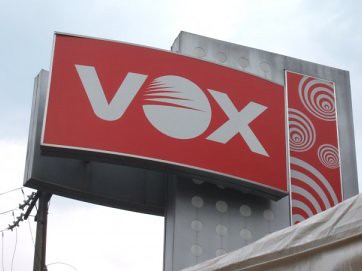
My colleague (translator/interpreter/fixer) and I did the rounds of the mobile operator HQ buildings in Asuncion. These varied a bit in terms of how expensively they were decorated, but the offices were not vastly different in arrangement or atmosphere to ones you might visit almost anywhere in the world. We were, however, on the way to airport, to visit an HQ which looked and felt rather different.
LATAM07
Vox HQ, Asuncion, Paraguay

On our travels around the seemingly quite sleepy Paraguayan capital, it became clear that the local telecoms scene was a close-knit community. Having already been shown around town by a helpful local driver who seemed to know personally everyone with whom we had a scheduled meeting, we had a nice piece of luck on our visit to one of the MNOs. The gentleman with whom we met was able to open doors at one of the organisations where we did not have an appointment fixed up. This introduction, then, led to a meeting with the Gerente Comercial of COPACO (Corporación Paraguaya de Comunicaciones), the state-owned incumbent wireline operator.

Informa's Americas region event had only recently expanded its remit from a gathering purely of GSM mobile operators. Part of our task was to increase the diversity of the audience not only in terms of countries represented but also in terms of aiming for a much broader range of telecoms businesses attending the show - fixed/mobile; state sector/private sector; involving delegates from the cable sector.

So it was wonderful to have the opportunity to visit companies in these target segments and something of an eye-opener to have conversations with the leaders of public sector operators (we also visited CANTV in Venezuela) and telecoms cooperatives, of which we managed to visit two in Bolivia.

What was novel for us was discussing the proposed themes of presentations these companies might offer at our event and hearing of topics quite different from the ones we had heard discussed by private sector GSM operators in previous iterations of the conference.
LATAM09
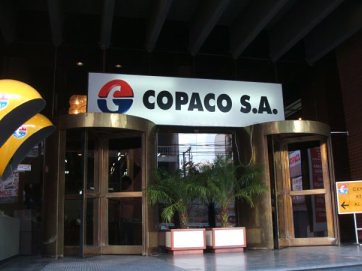
COPACO HQ, Asuncion.

COPACO, which we managed to visit just ahead of our flight to the next stop on the tour, was no exception. Our host, who was exceptionally generous with him time, was most animated when talking about how his organisation was striving to extend the availability of services to under-connected settlements. During this conversation, I couldn't help being struck by how this gentleman's language varied from what I was used to hearing at such meetings and at conferences. I don't recall hearing the terms 'EBITDA', 'shareholder value', 'market share', 'ARPU' or their Spanish equivalents during our chat. Our surroundings, too, were different. COPACO HQ lacked expensively designed marketing materials and branding. We entered through a hall in which customers could make payments. The scene there, to me at least, was somewhat reminiscent of a local government office in the UK - but before our local authorities were made to organise their activities along more commercial lines.

With this memorable discussion in mind, then, it was interesting for me to learn this week, via TeleGeography, that Millicom Cellular International-owned Tigo Paraguay has been awarded a contract to deploy mobile services in four under-served departments of the country, helping CONATEL, the national telecoms regulatory agency, achieve its universal service targets. Under the deal, Tigo will roll out networks to 35 municipalities where cellular services are currently unavailable and the Government will provide funding of around USD1.04 million to support the network deployment. In total, according to the TeleGeography item, the project is expected to cost around USD1.6 million and benefit around 20,000 Paraguayans in remote areas. The private sector, then, has a role to play in meeting some of the challenges discussed by my host on our visit to COPACO HQ last year.

COPACO itself, meanwhile, continues to harbour ambitions of entering the mobile services market. At present, according to the World Cellular Information Service, that market (the mobile penetration rate of which is 85.45%) is split as follows:
According to a recent TeleGeography story, COPACO expects to join this list by mid-2010. With my visit to the company's HQ in mind, I'll be interested to see how their mobile offering fares in competition with the existing cellcos.
Share/Save/Bookmark

Wednesday, 9 December 2009

Cambodia's mobile price war: peace in sight?

Beeline Cambodia: late entrant doing battle in a fierce tariffs war

DevelopingTelecomsWatch depends on the indispensable Phnom Penh Post for news of all things Cambodian, quoting that organ quite liberally, for example, when donning a flak jacket to report on the mobile price war which has been gripping the southeast Asian country for months.

It was also via that esteemed news outlet that DTW learned this week that the Cambodian Government has tired of waiting for the country's numerous cellcos to end to their damaging tariffs battle. A long-awaited edict setting minimum tariffs was signed by the Government last Friday, telecoms Minister So Khun is quoted as saying.

"We offered free-market principles, but operators kept having conflicts with one another, so the government needs to have a hand in it," So Khun said. The government will suspend the licence of any operators that violate the minimum tariff set by the edict, he added.

The Cambodian mobile market is currently contested by no less than nine MNOs. If there is another country with a population under 15 million whose cellular sector is split so many ways, it does not spring immediately to mind. Of that crowd of cellcos, one, so far, has reacted positively to the imposition of a minimum tariff regime. The Phnom Penh Post quotes Simon Perkins, CEO of Axiata-controlled Hello, who says he supports the initiative "to bring some structure to the telecom tariffs, in the absence of the usual competition guidelines and rules that exist in a lot of markets".

This decision, of course, comes too late for Millicom International Cellular, which announced in July that its three Asian operations (in Sri Lanka and Laos as well as in Cambodia) were to be reclassified as assets held for sale. The Luxembourg-headquartered mobile group cited problems around ongoing profitability in these Asian markets as a key reason for selling up and focusing its efforts on its African and Latin American properties. As DTW reported in the summer, Millicom CEO Mikael Grahne appeared to attribute much of the blame for deteriorating profits at Cellcard, the Cambodian cellco in which Millicom has a 58.4% stake, to the disruptive market-entry strategies of latecomers to the country's mobile arena. The same DTW piece, however, noted that another major shareholder in Cellcard does not agree with Millicom's assertion that this is negatively impacting profitability: "[There are] no concerns on profitability from our side," said Mark Hanna, CFO of Royal Group, which owns a 38.5% stake in the cellco, denying in July that margins had become tighter.

Such was the confidence of the Royal Group in this assertion that the local Cambodian conglomerate agreed to acquire Millicom's stake in Cellcard. This confidence also seems to be shared now by the Royal Group's bankers. According to a Bloomberg article earlier this month, Royal Group has hired Standard Bank Group Ltd. and Australia & New Zealand Banking Group Ltd. to arrange an 18-month bridging loan to help with the purchase of Millicom's share of the MNO.

The appetite of the Cambodian authorities for intervention in the mobile market does not end with tariff control.

Again, we are indebted to the Phnom Penh Post, this time for coverage of a debate around mobile network sharing in Cambodia.

Last month, the newspaper carried news of Minister So Khun calling for the country's MNOs to share infrastructure. So Khun said the initiative would avoid duplication of infrastructure, thereby reducing costs across the sector, as well as moderating the effect that mobile base stations are having on their surroundings.

"We do not want to see too many antennas dotted along roads in the future," said the Minister. Perhaps it would be too sarcastic to respond by asking "So why did you license nine mobile operators in a country of that size?"

Given that some of these nine are well-established players feeling the effects of the later entry of certain rivals, it seems reasonable to suggest that the response to any mandatory network infrastructure sharing might be rather mixed. As the Phnom Penh Post points out, the operators with an established presence in the market have spent many millions of dollars on infrastructure as part of their efforts to gain competitive advantage.

The Government has shared a draft of a proposed telecoms law one of whose provisions would be to make infrastructure sharing obligatory. The private sector response has been to agree that while there do exist benefits around cost reduction and environmental impact, market forces in Cambodia have not been given sufficient time to work.

"Mandatory facilities sharing will reduce the incentive on operators to build such infrastructure," said these recommendations. "This may result in less than the optimal number of towers being constructed such that when the operators commence infilling their networks to improve coverage and provide better service, they are unable to do so as all tower capacity has been filled."

DevelopingTelecomsWatch finds the mobile market of this particular Asian country to be fascinating. We'll keep watching.
Share/Save/Bookmark

Saturday, 7 March 2009

Adventures in telecoms socialism

In January, writing an article for the Com World Series blog, I discussed the links apparently being formed across Latin America by state-owned telecoms operators from countries with left-of-centre governments. The starting point was the news that Venezuelan incumbent telco CANTV was considering a strategic partnership with Ecuador's beleagured CDMA MNO Alegro PCS. I mentioned my own enjoyable trip to Caracas in April 2008, during which I had the opportunity to visit CANTV HQ. The operator had been renationalised by President Hugo Chávez in 2007. The external affairs representative whom I met was keen to tell me about how the organisation was looking to develop partnerships with telcos in politically sympathetic states such as Cuba and Nicaragua.

At that point, I was only aware of Latin America as an arena in which state-owned telecoms service providers from countries with left-leaning governments might look specifically to markets run by political fellow travellers for new opportunities.

Last month, however, I learned from a brief Global Mobile Daily report that Vietnamese operator Viettel, owned by the nation's military, has selected Huawei and Ericsson to provide equipment for expanding its networks overseas into North Korea, Cuba, and Venezuela. The report notes that the operator has yet to enter any of these markets, and states that, according to Viettel Deputy Director Tran Phuoc Minh, discussions are planned with telecoms authorities in each country.

This is just the latest move in an international expansion strategy with which Viettel has already made progress. Last month, Viettel's subsidiary in Cambodia, using the Metfone brand, officially launched mobile services. The unit is said to have over 1000 base stations supported by a 5000km fibre-optic network linking all provinces in Cambodia. The new operation reportedly attracted 500,000 subscribers in its first three months of trial services. A Saigon Times article on the operator's foray into neighbouring Cambodia indicates that the new cellco will target low-income subscribers with a wide range of low-priced services and packages. Viettel Deputy General Director Nguyen Manh Hung is quoted as saying that this approach is not only about customer acquisition but is also intended to "contribute to society".

Viettel, the article states, also announced the provision of free Internet services for nearly 1000 Cambodian schools within the next five years. Rural rollout seems to be high on the Metfone agenda, with the operating planning to "extend its coverage to Cambodia’s remote villages and islands."

Meanwhile in Venezuela, CANTV's mobile arm Movilnet is set to launch a low-cost mobile phone on the local market. A Telecompaper report this Thursday states that the device, dubbed 'El Vergatario' is the first mobile handset produced in the country. According to Movilnet President Jacqueline Faria the device will be the cheapest available in Venezuela. To be launched for Mother's Day in May, the CDMA phone will be available for VEF 30 (USD 13.95). El Vergatario will be produced at the Venezuelan Telecommunications Factory (Vetelca), a joint stock company, in which the Venezuelan state holds an 85% stake, with the remaining 15% owned by ZTE. The article suggests that Vetelca hopes to sell around 600,000 Vergatarios this year.

Movilnet's subscribers seem to be a remarkably loyal bunch and the country's mobile market overall is one in which the three competitors' share of the subscriber base has remained largely unchanged for some time. Movilnet's competitors have not remained complacent. Movistar Venezuela has been steadily migrating customers from a legacy CDMA to a newer GSM network since March 2007 and has more recently launched W-CDMA services. Digitel, owned by Venezuelan businessman Oswaldo Cisneros, is also working to roll out 3G services in two stages, starting this month, according to local news portal Ciberespacio. The operator currently offers Huawei USB modems and by mid-2009 will integrate voice and data services.

OK, comrades. That's all I have on telecom-socialism for now.
Share/Save/Bookmark

Thursday, 12 February 2009

Millicom's global emerging markets strategy examined


Following my recent posts here regarding 2008 results and 2009 forecasts from the emerging markets components of the Telenor and TeliaSonera businesses, I would like to examine the performance of a company whose main focus is to provide affordable, widely accessible and readily available prepaid cellular telephony services in developing countries.

In April 2008, I spent an enjoyable two weeks visiting a very diverse range of telecoms service providers in four South American countries. At the time, I was responsible for the development of the Informa Telecoms & Media-produced annual Americas Com conference and exhibition, part of the Com World Series, a global suite of emerging markets-focused telecoms sector networking and discussion events. In the case of Americas Com, which under my watch was held twice in Rio de Janeiro, we were working to broaden the audience. Formerly known as GSM Americas, the event had a strong track record of gathering executives from mobile operators, particularly from Brazil and the Cono Sur countries of Argentina, Chile and Uruguay. I was keen to connect with prospective speakers and delegates from less well-represented countries. Another priority was to reach out to wireline operators of various kinds. Across the four countries I visited, therefore, I had meetings with people from national incumbent long-distance carriers, several cooperative-owned LECs and a cable MSO - as well as with MNOs on every stop of the tour.

In Paraguay and Bolivia, I met with very friendly people working for the Tigo-branded mobile operations of Luxembourg-headquartered Millicom International Cellular. For someone trying to secure top-level conference speakers, Millicom is a tough nut to crack. Having their executives speak in a public forum about company strategy or the company's view of technology choices is not something the group seems enthusiastic about.

This week, as picked up by Telecompaper, Millicom released Q4 2008 results and discussed its plans for the year ahead. The company reported fourth-quarter EBITDA up 31% percent from a year earlier to USD 406 million and revenues up 18% to USD 907 million.

Millicom met its target for an EBITDA margin of 45% in the period, but net profit fell to USD 66 million from USD 113 million a year ago, due to a net charge of USD 55 million for tax and forex losses. Total subscribers rose to 32.0 million at year-end from 30.6 million in the third quarter.

The company plans capital spending of USD 1 billion in the current year, down from USD 1.4 billion in 2008. Millicom says that it also plans to lower OPEX due to the challenging economic environment, and also expects a continued impact on results this year from the stronger US dollar. The cellco is also aiming to scale back its promotions in Latin America to focus more on higher value customers. Millicom says this is due to slowing subscriber growth in increasingly penetrated markets.

For me, this is very familiar territory. I have lost count of the number of presentations I have heard from companies in the broad customer management/billing/CRM space which urge operators in developing countries to be ready for market maturity. The mantra tends to go something like this: identify the highest-value customers, decide if you want to keep the less profitable ones (or have your competitors handle them), maximise the value of every customer, prevent churn.

In a number of the Latin American countries in which Millicom competes, market conditions do indeed seem to be at the stage where these kinds of issues need to be treated with some urgency. El Salvador broke the 100% mobile penetration barrier in December, up from 77.59% a year before. Other highly penetrated markets in the Millicom footprint include Guatemala (84.49%), Honduras (79.25%), Paraguay (81.21%) and Colombia (90.71%). In the Latin American arm of the Millicom empire, Bolivia stands out as a market with rather more room for growth, mobile penetration having reached 51.32% by December 2008, up from 40.96% one year earlier.

I am not clear whether Millicom intends to sharpen the focus on higher-value customers even in somewhat under-penetrated Bolivia - or whether reaching less affluent, lower ARPU population segments remains a priority there. If Tigo Bolivia does not go after these segments, there are other players who may be keen to step in.

It was in Bolivia that I met representatives of telecoms cooperatives. Collectively, these co-ops are the leading providers of local fixed telephony, ahead of recently renationalised national incumbent long-distance carrier Entel. The two co-ops we visited also bundle pay-TV services with fixed voice. Several of them offer mobile services as MVNOs. For me, the visits to co-ops in Santa Cruz (COTAS) and Cochabamba (COMTECO) were as much about fact-finding as about banging the drum for our Americas Com conference. I knew little about how these purely local telcos are organised and what their strategies are. I learned that a component of those strategies is to reach outlying settlements and bridge the urban-rural digital divide.

Moving north, Central America is home to the one Millicom holding which bucks the trend of building and buying mobile operations only. In this week's report, the company said that the fixed-line business it acquired in July last year is performing as expected.

This asset, the triple play cable TV group Amnet, operates coaxial and FTTH networks in Guatemala, Honduras, El Salvador, Nicaragua and Costa Rica. When this acquisition was confirmed, Global Mobile Daily speculated that "the move would appear to be aimed at Tigo being able to offer quadplay services in Latin America."

This week's report from Millicom indicates that the company is enjoying improving margins in Africa, where it plans to sell its Sierra Leone operation. I was curious about why Millicom would want to sell one African operation so soon after buying a licence in another market - in November the company announced it has been awarded the third national mobile licence for Rwanda.

On the face of it, Sierra Leone does not appear to be a wholly unattractive market. Mobile penetration has grown strongly in recent years - from 5.45% at year-end 2005 to 29.87% by December 2008, a figure which leaves good growth potential to be exploited. However, Sierra Leone is the lowest ranked country on the Human Development Index and seventh lowest on the global Human Poverty Index, and is known to suffer from endemic corruption - a challenging place to do business. Millicom has also fared less well than most of its rivals in the Sierra Leone market. Currently, the Tigo operation lags far behind market-leading Africell (36.04% market share), 2nd placed Comium Sierra Leone (31.78%) and 3rd placed Zain Sierra Leone (24.80%). Tigo's market share? Just 7.38%, ahead of only chronic laggard Datatel (0.01% ).

Millicom is not really going in the right direction in the battle for market share in Sierra Leone. In December 2005, Tigo had 9.15% of subscriptions. This fell to 7.92% a year later, rose to 9.17% by December 2007 and then dropping off again over the last twelve months.

Millicom generally does rather better in the smaller markets it serves, enjoying the top spot in El Salvador (pop. 7 million), Guatemala (pop. 13 million), Honduras (pop. 8 million) and Paraguay (pop. 7 million). It looks to me as though the combination of a small overall market size and a long struggle to carve out a decent chunk of that has finally made Millicom go cold on Sierra Leone in these challenging times.

Another market in which the company faces challenges is Senegal. In November, Global Mobile Daily reported that Millicom had begun arbitration proceedings with the International Center for the Settlement of Investment Disputes (ICSID) against the Senegalese Government, which had suspended the operator's license.

It was in the same month that Millicom announced the USD 60 million purchase of 15 year licence to operate in Rwanda. There is certainly room to grow there. Mobile penetration is low at around 13.5% and the population is only served by two incumbent operators, RwandaTel and the market-leading subsidiary of South Africa's MTN.

According to the GMD article, Marc Beuls, President and CEO of Millicom, notes that the Rwandan company can forge some synergies with its Congo and Tanzanian operations and also says that the country has a well developed road and grid infrastructure, which will enable the company to build out a network quickly and cost-effectively.

In these challenging times, Millicom seems to be an example of a telecoms group with far-flung operating units that is looking hard at these various operations and making context-specific business decisions rather than pursuing a one-size-fits-all approach to emerging markets worldwide.

Share/Save/Bookmark

Friday, 6 February 2009

GSM vs. CDMA: the battle goes on?

One of the most rewarding aspects of being part of Informa Telecoms & Media's Com World Series team was having the opportunity to learn about regions which I had not previously studied or visited. Previously, while creating and hosting telecoms sector conferences for other companies, my travels had taken me to North America, Central & Eastern Europe and to Russia. My Com World Series brief took me further afield. In addition to already familiar territory, regions I covered in the Informa role included the Middle East , India/South Asia and Latin America.

In the last of these regions, my visits began at what felt like the relatively advanced stages of a protracted cellular network standard battle between the GSM and CDMA camps. A key partner in the delivery of the GSM Americas/Americas Com events in which I was involved was 3G Americas, an association founded in 2002, with a mission to unite "mobile operators and manufacturers in the Americas to provide a single voice to represent the GSM family of wireless technologies – GSM, GPRS, EDGE, and UMTS/HSDPA."

The 3G Americas President, Chris Pearson and the association's Latin America Director Erasmo Rojas led an Executive Briefing session at each of the Americas Com conferences delivered under my watch. They did a great job of rounding up CxO-level participants from key South American MNOs. I don't think they would mind me saying that on both occassions Chris's opening presentation really banged the drum for the GSM family in terms of describing advantages over rival standards.

I cannot be sure to what extent 3G Americas has been instrumental to the Western Hemisphere's migration away from CDMA technology in favour of the GSM flavour, but that migration has been significant. The graphic below, taken from the 3G Americas website (and drawn from Informa Telecoms & Media WCIS figures), shows how GSM has prevailed in the opening years of this new century:

It is worth pointing out that the non-GSM subscriptions are now, for the most part, in North America. In the USA and Canada, it is estimated that there currently exist around 153 million CDMA connections. GSM subscriptions across these two markets number around 104 million and W-CDMA lines have just reached the 20 million mark.

Looking further south, Informa Telecoms & Media estimated that in the 'Americas' region (all markets in the Western Hemisphere except the USA and Canada), there were almost 400 million GSM subscriptions and just 40.6 million CDMA subscriptions by the end of December 2008. Of these CDMA lines, the two most significant chunks were the 11.7 million connections in Brazil and the 15.8 million in Venezuela. In the case of Brazil, a single operator, Vivo, accounts for all the CDMA subscriptions.

When I looked up these figures today, I was a little surprised that Vivo, a joint Telefónica-Portugal Telecom operation, still has so many subscribers on its CDMA network. The last time I was looking closely at developments at Vivo, which was back in about May 2008, I was under the impression the company planned to shift all of its CDMA mobile subscribers to its newer GSM network. That process is certainly happening - but at nothing like the speed I imagined.

In Venezuela, the vast majority of the CDMA connections are owned by renationalised Movilnet, which has an estimated 11.3 million subscribers - vs. the 4.5 million CDMA connections of rival Movistar. Unlike Movilnet, the Telefónica-backed Venezuelan MNO has been steadily shifting users to a GSM network since March 2006. However, the state-owned cellco is also, finally, making the move to GSM. In December last year, Global Mobile Daily reported that billing vendor Amdocs has deployed a billing solution to support Movilnet's new GSM network.

We can therefore expect continuing developments in Latin America to impact upon the next version of the above graphic. Look out for further erosion in the non-GSM networks' share of Western Hemisphere mobile subscriptions.

One might infer from all of this that CDMA is a technology in quick decline towards an inevitable demise. However, recent news items from India lead me to believe that the GSM-CDMA battle is very much a live one in that country.

Earlier this week, I spotted that Sistema Shyam TeleServices is potentially looking at more acquisitions in order to gain better access to the Indian market. The company, a joint venture between majority shareholder Sistema of Russia and India's Shyam Group, was among operators to get new licences in early 2008. The nascent cellco is aiming to offer CDMA-based mobile services across the country before the middle of 2010. A Business Line/Hindu Group article dated Jan 30th quotes Vsevolod Rozanov, President and CEO, Sistema Shyam TeleServices, who says "We are open to any opportunities for acquiring a mobile services company in India to speed up our roll out plans. However, there are not too many CDMA operators in the country who are looking to sell their business." Asked specifically about well-established CDMA MNO Reliance Communications, Rozanov said, "Yes we can look at Reliance’s business if they are willing to sell. However, I do not think that is the case." According to the article Reliance was, at some unspecified recent time "considering a merger deal with South Africa-based telecom player MTN."

When the full gravity of the global economic downturn started to become clear to us all last year, I sensed that one casualty might be the international expansion plans of Russia's leading telecoms groups. In that context, Sistema's apparent willingness to spend money on growing its Indian CDMA operation suggests to me not only confidence in the Indian market but also a belief that the CDMA standard is up to the task of supporting attractive, well-priced and future-proof services.

Another sign that CDMA is to be taken seriously in India is the recent, strongly worded response of the COAI (Cellular Operators' Association of India) to reported plans on the part of one operator to make EV-DO data cards available on the market. The COAI is a club of GSM operators, a group that must surely be frustrated by the ongoing delays in the licensing of spectrum for 3G and WiMAX services. Telecoms.com reported today that having already put the spectrum auctions off until this year, because of the government's failure to clear the relevant radio spectrum in all operating regions ('circles' in the local jargon), new delays are anticipated in the wake of proposals to double the base price of the licences.

India's GSM players, then, are clearly concerned about being outpaced by CDMA operators. An article in yesterday's Economic Times says that COAI Director General T.V. Ramachandran has written to the country's telecoms Minister to seek assurances that no private player should be allowed to launch EV-DO service without 3G being made available to all players. The article states that according to the COAI, the launch of EV-DO services would be unfair to the GSM operators as "CDMA operators have ample spectrum to offer both 2G as well as 3G services and this can result in [giving] unfair anti-competitive advantage to CDMA and tilt the playing field to the disadvantage of the private GSM operators".

I daresay Mr Ramachandran and his colleagues will make a strong and persuasive case. During my stint running the Com World Series Indian event I had the pleasure of meeting the COAI Director General several times. One memory stands out. In 2007 I was asked to have lunch with Mr Ramachandran and his guests from various Indian government agencies at the conference. One of the guests, on agreeing with a point made by the COAI head, gave me a useful piece of advice about keeping tabs on telco sector developments in India. "If you want to know," said my neighbour at the lunch table, "watch T.V." I will indeed keep an eye out for more on this story. I am interested to see if the COAI can indeed prevail in their argument that EV-DO gives CDMA operators an unfair advantage over GSM operators struggling with further delays to their own 3G plans.

All of this makes me look back and smile at a very simplistic remark made to me years ago by one of my first bosses at a telecoms sector conference company. It was one of his tasks to set me on the path of cutting through the then-forbidding tangle of telco jargon. "CDMA is dead," he told me. "You only need to worry about GSM". I don't think that can have been true then given that it's abundantly clear that it's not correct even now.


Share/Save/Bookmark
